
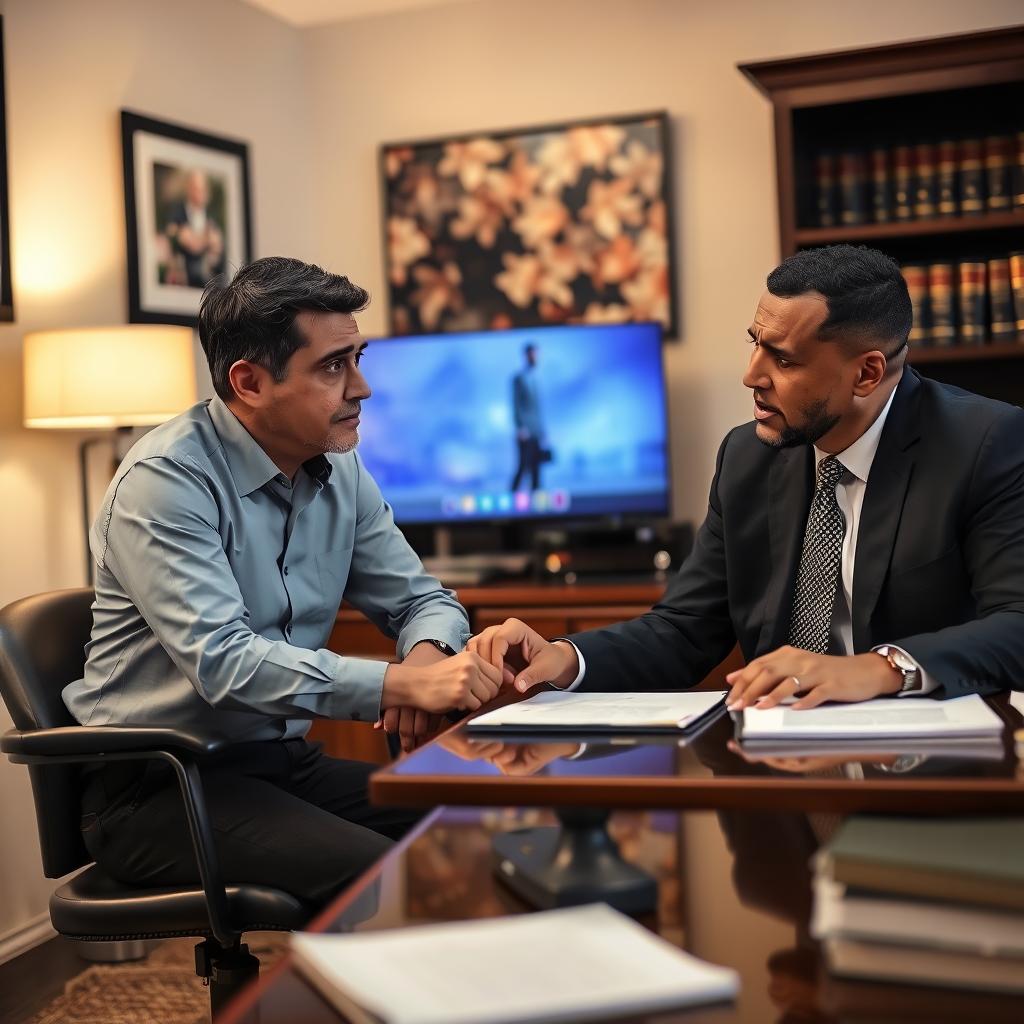
Graffiti Defense Lawyer American University Park, DC
A graffiti charge in American University Park is heard at the D.C. Superior Court, a courthouse that handles criminal matters differently from most jurisdictions in the United States. In Washington, D.C., local crimes are prosecuted by the United States Attorney’s Office for the District of Columbia, not by a district attorney. That federalized prosecution structure means a person accused of graffiti-related offenses—often charged as destruction of property or malicious destruction of property under D.C. Code Title 22—faces a process driven by federal prosecutors. For someone living or working in American University Park, near the Tenleytown border, a graffiti arrest can trigger consequences that range from fines and community service to a permanent criminal record. Mr. Sris and his Of Counsel at Law Offices Of SRIS, P.C. represent people confronting graffiti charges at D.C. Superior Court. The firm serves clients from American University Park and surrounding neighborhoods, including Spring Valley and Friendship Heights, from its Arlington location. To request a consultation about a graffiti defense matter, reach Law Offices Of SRIS, P.C. at (888) 437-7747.
Law Offices Of SRIS, P.C. – Advocacy Without Borders.
What Graffiti Defense Means in American University Park, DC
Graffiti enforcement in the District of Columbia relies heavily on D.C. Code § 22-3312.01, which makes it unlawful to deface public or private property without the owner’s consent. A person can be charged simply for possessing a graffiti tool with intent to use it. Because American University Park is a residential neighborhood with commercial corridors along Massachusetts Avenue and Wisconsin Avenue, the places where graffiti is commonly reported include bus shelters, building walls, Metro station property, and public utility boxes. When property is defaced within the jurisdictional boundaries of the District, the case goes to the Criminal Division of the D.C. Superior Court at 500 Indiana Avenue NW, Washington, DC 20001.
Prosecutors from the United States Attorney’s Office present these cases as property crimes. The possible penalties include incarceration, probation, restitution, and community service. Additionally, a conviction for graffiti—even one that seems minor—creates a criminal record that can affect employment, housing, and security-clearance eligibility. The D.C. Pretrial Services Agency conducts an assessment and makes a release recommendation; D.C. Does not use cash bail for most offenses. An experienced defense attorney familiar with the D.C. Superior Court can review the charging documents, evaluate whether law enforcement obtained evidence properly, and present factors that may lead the prosecutor to amend or dismiss the charge. Local practice at the courthouse near Judiciary Square means that many graffiti cases can be resolved without trial when the defense engages early.
How Mr. Sris and His Of Counsel Handle Graffiti Defense Cases
When a person contacts Law Offices Of SRIS, P.C. about a graffiti charge in American University Park, the first step is a detailed review of the arrest and the evidence. David B. Sris, Owner and Founder of the firm, is a former prosecutor who understands how the United States Attorney’s Office evaluates property-crime cases. Mr. Sris and his Of Counsel examine the specific subsection of D.C. Code Title 22 that the government has charged and determine whether the prosecution can prove each element beyond a reasonable doubt. They look for procedural issues—for example, whether law enforcement conducted a lawful stop, whether any statement obtained from the accused is admissible, and whether a search was grounded in an exception to the warrant requirement. Because D.C. Superior Court operates under the unique hybrid of federal and local authority, a defense based on federal constitutional protections often applies with full force.
After evaluating the evidence, Mr. Sris and his Of Counsel discuss with the client the options: negotiate a dismissal or reduction of the charge, pursue a deferred disposition arrangement where available, or proceed to trial. D.C. Law permits sealing of certain criminal records under D.C. Code § 16-803 after an acquittal, a dismissal, or after a waiting period for qualifying convictions. The firm works to position each client for the strongest possible post-disposition outcome. Throughout the process, the attorneys appear at the D.C. Superior Court, which is about 4.5 miles from the Arlington’s Arlington location via I-395, and regularly handle matters on the calendar of the Criminal Division.
About Mr. Sris and His Of Counsel
Mr. Sris, Owner and Founder of Law Offices Of SRIS, P.C., established the firm in 1997. A former prosecutor, he is admitted to practice in Virginia, Maryland, the District of Columbia, New Jersey, and New York. Mr. Sris testified before the Virginia House Courts of Justice Committee in support of 2019 HB 635 (chief patron Del. David Bulova). The firm’s Of Counsel attorneys bring additional criminal defense experience in the District of Columbia, including familiarity with the charging practices of the United States Attorney’s Office. Together, Mr. Sris and his Of Counsel draw on extensive combined legal experience to handle graffiti and other property-crime defense matters. Results may vary.
Frequently Asked Questions
Who prosecutes a graffiti case in Washington, D.C.?
Criminal graffiti charges in the District of Columbia are prosecuted by the United States Attorney’s Office for the District of Columbia, a federal prosecutorial entity. Unlike most cities, D.C. Does not have a district attorney; instead, local crimes under the D.C. Code are handled by assigned assistant United States attorneys. The cases proceed in the Criminal Division of the D.C. Superior Court at 500 Indiana Avenue NW. The Pretrial Services Agency, a federal agency, assesses each person arrested and recommends release conditions rather than a traditional cash bail system. Understanding the federalized local prosecution model is essential for anyone facing a graffiti charge in American University Park.
Can I get my D.C. Criminal record sealed after a graffiti case?
Yes, D.C. Law allows a person to petition the court to seal certain criminal records under D.C. Code § 16-803 if the case ended in an acquittal, a dismissal, or, for qualifying convictions, after the required waiting period. Graffiti offenses that result in a nolle prosequi or a not-guilty verdict are generally eligible for sealing sooner. The petition is filed at the D.C. Superior Court. An experienced attorney can help determine whether a specific graffiti-related record qualifies and guide the person through the sealing process. Eligibility depends on the specific facts and the final disposition of the case.
Does D.C. Use cash bail for graffiti offenses?
No, the District of Columbia does not operate a traditional cash bail system. Instead, the D.C. Pretrial Services Agency conducts a risk assessment after an arrest and recommends conditions of release to the judicial officer. Most individuals charged with graffiti or other misdemeanor property offenses are released without having to pay money. Conditions may include stay-away orders from certain locations, regular check-ins, or other supervision requirements. The arraignment at D.C. Superior Court usually takes place within 24 hours of the arrest.
How long does a criminal case take in D.C.?
The timeline for a graffiti case in D.C. Varies depending on whether the charge is a misdemeanor or a felony and on the court’s calendar. Misdemeanor cases generally proceed through arraignment and pretrial stages and may reach trial within a few months. Felony cases require a grand jury indictment and often take longer. D.C. Superior Court scheduling, motion practice, and any competency evaluations conducted at St. Elizabeths Hospital can affect the overall duration. Speaking with an attorney early can help establish realistic expectations for a specific matter.
Do I need a lawyer for a graffiti charge in American University Park?
A person is not legally required to hire a lawyer for a graffiti charge, but having an experienced criminal defense attorney can significantly affect the outcome. A graffiti conviction can create a criminal record that follows the person long after any fine or community service is completed. A defense attorney familiar with the D.C. Superior Court and the United States Attorney’s Office can evaluate the evidence, identify procedural issues, and negotiate positions that are often unavailable to an unrepresented individual. To discuss a graffiti matter in American University Park, reach Law Offices Of SRIS, P.C. at (888) 437-7747.
What are the penalties for graffiti-related offenses in D.C.?
Penalties for graffiti in the District depend on the value of the damage and whether the offense is charged as a misdemeanor or a felony. Under D.C. Code Title 22, property damage valued under the felony threshold is treated as a misdemeanor, which may result in up to 180 days of incarceration and a fine. Damage that exceeds the felony threshold can lead to incarceration for up to 10 years and a substantially higher fine. In addition, a judge may order restitution to the property owner and community service hours. Every case turns on its own facts, so consulting an attorney for an individualized assessment is important.
Serving the American University Park area and nearby D.C. Neighborhoods:
Criminal defense in Washington, D.C. |
Criminal defense in Georgetown |
Criminal defense in Spring Valley |
Criminal defense in Cleveland Park |
Criminal defense in Chevy Chase
Primary legal sources:
D.C. Code Title 22 (Criminal Offenses) |
D.C. Superior Court |
D.C. Courts
Attorney advertising. Prior results do not guarantee a similar outcome. Case results depend on a variety of factors unique to each case. Results may vary.