
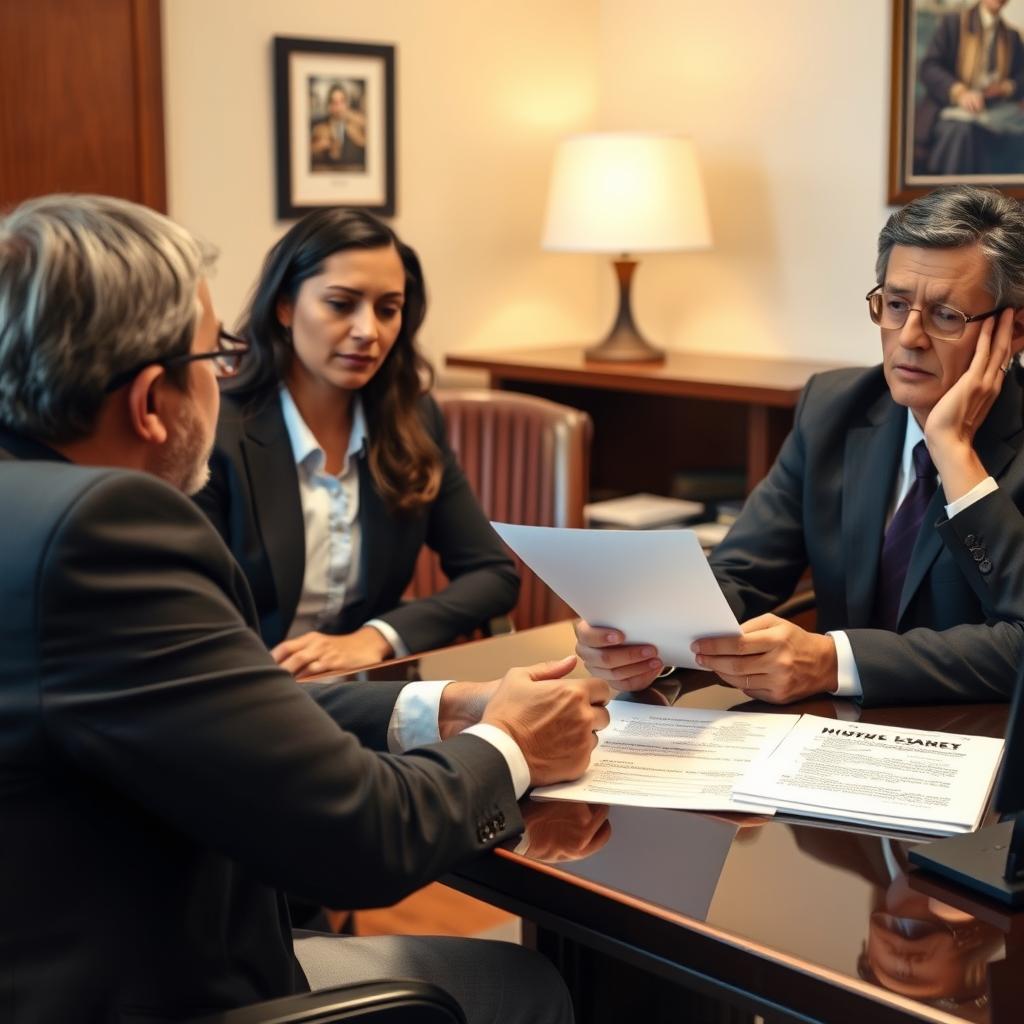
Harassment Lawyer Washington DC
You were out in Adams Morgan when a disagreement at a bar escalated into a confrontation. Now you are facing a harassment charge in DC Superior Court. The case will be prosecuted by the United States Attorney’s Office—not a local district attorney—and the stakes reach far beyond any single court date. Mr. Sris and the firm’s Of Counsel attorneys understand how Washington, D.C.’s unique federal‑local criminal system works and work to protect your record, your career, and your future. Reach the firm at (888) 437‑7747.
Strategy Options for Harassment Defense in Washington, D.C.
When a harassment charge is brought, the prosecution must prove every element beyond a reasonable doubt. Mr. Sris and the firm’s Of Counsel attorneys examine every piece of evidence immediately—text messages, call logs, social‑media posts, and witness statements—to identify gaps in the prosecution’s case. In many harassment prosecutions, the alleged conduct occurred during a heated exchange, and the defense may show the exchange was mutual or that the accusations are exaggerated. The firm works to preserve exculpatory evidence, secure surveillance recordings, and interview the people who were present. If a protection order was issued at the time of arrest, the defense also addresses any collateral consequences flowing from that order.
Washington, D.C. Offers pretrial‑diversion programs for certain non‑violent offenses, and when the facts support it, the firm negotiates with the United States Attorney’s Office to steer a case toward dismissal or an amendment to a lesser offense. Every step—from the initial appearance before a D.C. Superior Court magistrate to any trial—is handled by an experienced criminal practitioner who knows the prosecutors, the Pretrial Services Agency assessment process, and what the court expects.
What to Expect When You Face a Harassment Charge in D.C.
Once an arrest is made by the Metropolitan Police Department, the case is filed with the D.C. Superior Court, Criminal Division, located at 500 Indiana Avenue NW, Washington, DC 20001. The United States Attorney’s Office for the District of Columbia prosecutes the case; there is no local district attorney. At the initial appearance, the Pretrial Services Agency—a federal agency—conducts a risk assessment and recommends release conditions. Cash bail is not the norm in D.C., and most individuals are released pending trial under conditions that may include stay‑away orders, check‑ins, or other supervision.
The case then proceeds through a status‑hearing stage. Mr. Sris and the firm’s Of Counsel attorneys attend every hearing, review the discovery the government is required to disclose, and explore whether a motion to dismiss or a motion to suppress evidence is appropriate. If the case does not resolve, it can be set for a bench trial or a jury trial. Cases are heard in the same courthouse that handles everything from traffic matters to significant felonies, and the timeline varies based on court scheduling and case complexity.
Penalty Overview for Harassment Offenses
Harassment in Washington, D.C., is prosecuted under D.C. Code Title 22. Depending on the specific charge and whether a protective order is in place, a conviction can result in a jail sentence of up to 180 days for a misdemeanor offense and fines of up to $1,000. When the behavior involves a credible threat, a weapon, or violation of a court order, the charge can be elevated to a felony carrying significantly greater incarceration. A conviction also creates a permanent criminal record that can affect security clearances, employment, and housing. The firm works to avoid a conviction on your record, but because every case is different, no particular outcome can be promised.
Even before trial, an arrest for harassment may trigger the issuance of a temporary protection order. If a permanent protective order is entered after a hearing, the respondent can lose the ability to possess a firearm under federal law—a consequence that endures for the life of the order. Mr. Sris and the firm’s Of Counsel attorneys address not only the criminal charge but also the civil‑protection‑order proceeding, often working to resolve both matters on a coordinated basis.
Experienced Attorneys for D.C. Harassment Cases
Mr. Sris, Owner and Founder of Law Offices Of SRIS, P.C., is a former prosecutor who has practiced criminal law since founding the firm in 1997. He is admitted to practice in the District of Columbia, Virginia, Maryland, New Jersey, and New York. Mr. Sris testified before the Virginia House Courts of Justice Committee in support of 2019 HB 635 (chief patron Del. David Bulova). He brings that same familiarity with the legislative process and courtroom procedure to every criminal matter the firm handles.
The firm’s Of Counsel attorneys add extensive courtroom experience in D.C. Superior Court and in federal court. Together, Mr. Sris and the firm’s Of Counsel attorneys have handled criminal cases from initial appearance through trial. Results may vary.
Frequently Asked Questions
What constitutes harassment under D.C. Law?
Harassment in Washington, D.C., generally involves repeated, unwanted conduct intended to annoy, alarm, or threaten another person. The specific statute charged depends on the facts: stalking, telephone harassment, electronic harassment, or violations of a protective order. Prosecutors look for a pattern of behavior—such as repeated calls, messages, or physical proximity—that causes the recipient to feel fearful or distressed. A single angry outburst usually does not rise to the level of criminal harassment unless it includes a threat of bodily harm or a weapon.
What should I do immediately after being arrested for harassment?
Ask to speak with an attorney before answering any questions, and do not contact the alleged victim. Even an innocent message or a call to “clear things up” can be used by prosecutors as evidence of continuing contact. Preserve all texts, voicemails, and social‑media messages that may show context, but do not discuss them with anyone except your lawyer. A consultation with a criminal attorney at the earliest possible stage lets you understand what charges you face and what immediate steps you can take to protect your record.
Can harassment charges be dropped in DC?
Yes, the United States Attorney’s Office can dismiss or decline to prosecute a harassment case if the evidence is insufficient. The government has prosecutorial discretion. Mr. Sris and the firm’s Of Counsel attorneys work to present mitigating evidence and highlight weaknesses in the prosecution’s case early—often before the first status hearing. If the alleged victim recants or refuses to cooperate, the prosecutor may be forced to drop the case, though the government can sometimes proceed without the complaining witness through other evidence.
How does a lawyer defend a harassment accusation in Washington, D.C.?
A defense may challenge the credibility of the complaining witness, demonstrate a lack of intent, or show that the conduct was protected speech. The firm obtains all available evidence, including surveillance footage and cell‑phone records, and interviews any witnesses. When the accusation arises from a custody dispute, workplace conflict, or relationship breakup, the defense will look for motives to fabricate. In court, the firm cross‑examines the government’s witnesses and may present its own evidence to show the alleged conduct was not criminal.
Do I need a lawyer for a harassment charge even if the case seems minor?
Yes; even a misdemeanor harassment conviction can create a permanent criminal record and lead to a protective order with lasting consequences. Without counsel, you risk pleading to something that harms your ability to work, hold a security clearance, or own a firearm. An experienced attorney can often secure a resolution that avoids a conviction—through diversion, deferred‑disposition agreements, or a dismissal after compliance with certain conditions—that a self‑represented person would not know to seek.
How do I find the right harassment lawyer in Washington, D.C.?
Look for an attorney who regularly practices in D.C. Superior Court and understands the federal‑local hybrid prosecution system. Because the United States Attorney’s Office prosecutes local crimes in the District, experience with that specific office is helpful. Mr. Sris and the firm’s Of Counsel attorneys appear routinely in D.C. Superior Court and know the prosecutors, the Pretrial Services Agency process, and the local procedural rules. Call (888) 437‑7747 to schedule a consultation.
If you are facing a harassment charge in Washington, D.C., the time to act is now. Reach Mr. Sris and the firm’s Of Counsel attorneys at (888) 437‑7747 to discuss your situation and explore your defense options. For a detailed statutory breakdown of harassment laws, see our comprehensive analysis at srislawyer.com.
Law Offices Of SRIS, P.C.
1655 Fort Myer Dr, Suite 700, Room 719, Arlington, VA 22209
Serving Washington, D.C. By appointment. (888) 437‑7747
Attorney advertising. Prior results do not guarantee a similar outcome.
Case results depend on a variety of factors unique to each case.
Results may vary.