
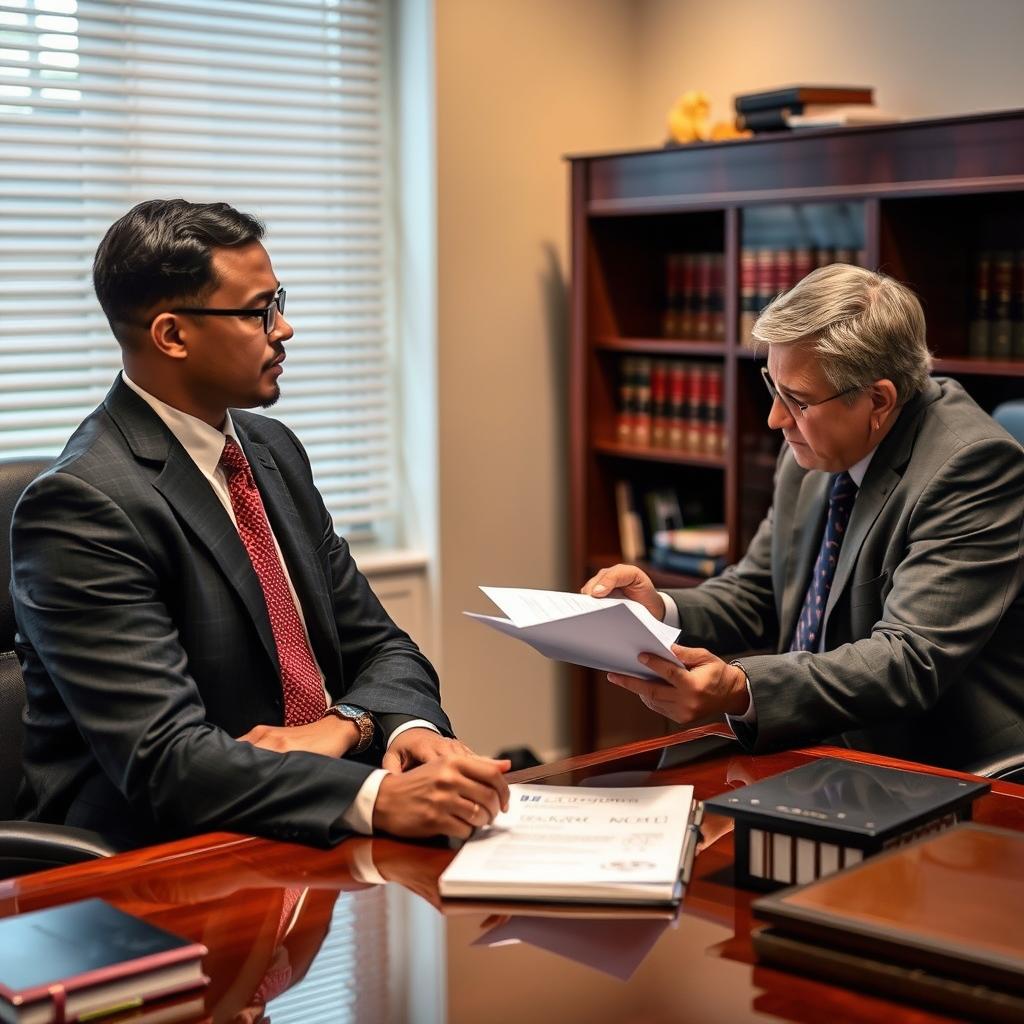
Resisting Arrest Lawyer Georgetown, DC
An arrest in Georgetown unfolds quickly, and the moments immediately afterward can shape the direction of a criminal case. When law enforcement places someone in custody, the charge of resisting arrest may be added to whatever underlying offense prompted the stop. That additional charge carries its own consequences under District of Columbia law, and it requires a defense that addresses both the facts of the encounter and the legal standards that govern police-citizen interactions. Georgetown residents facing this situation encounter a criminal justice system unlike any other in the United States. The District of Columbia is a federal territory, and its local crimes are prosecuted by the United States Attorney’s Office for the District of Columbia, not by a locally elected district attorney. Cases are heard at DC Superior Court, located at 500 Indiana Avenue NW, just east of Georgetown near Judiciary Square. Mr. Sris, Owner and Founder of Law Offices Of SRIS, P.C., and the firm’s Of Counsel attorneys represent individuals charged with resisting arrest in Georgetown and throughout the District. To request a consultation, reach the firm at (888) 437-7747. Law Offices Of SRIS, P.C. – Advocacy Without Borders.
What Resisting Arrest Means in Georgetown, DC
Georgetown’s streets, from M Street and Wisconsin Avenue to the quieter blocks near the university and the waterfront, are patrolled by the Metropolitan Police Department and, in certain areas, by federal law enforcement agencies including the U.S. Park Police and the Secret Service Uniformed Division. An encounter that begins as a traffic stop, a pedestrian inquiry, or a response to a noise complaint can escalate into an arrest. When an officer asserts that the person being taken into custody resisted—by physical action, by refusal to comply with commands, or by conduct the officer interprets as threatening—a resisting arrest charge under D.C. Code Title 22 may be added to the case.
The legal and procedural landscape in the District of Columbia affects how a resisting arrest charge is handled from the initial appearance onward. Unlike most states, the District does not use a traditional cash bail system. The Pretrial Services Agency, a federal agency, conducts a risk assessment and makes a release recommendation to the court. Most defendants facing non-violent charges are released without posting money, but a resisting arrest charge—because it involves an allegation of conduct directed at law enforcement—may influence the PSA recommendation and the judicial officer’s release decision. The charge is heard at DC Superior Court, a unified trial court with a Criminal Division that handles both misdemeanor and felony matters. Prosecutors from the United States Attorney’s Office for DC bring charges and litigate cases under the D.C. Code. This federal-local hybrid means that a Georgetown resisting arrest case involves federal prosecutors operating in a local court system, a configuration unique to the District.
How Mr. Sris and the Firm’s Of Counsel Attorneys Handle Resisting Arrest Cases
Defending a resisting arrest charge begins with a careful review of the arrest itself. Law enforcement officers in the District must have a lawful basis for the underlying stop, detention, or arrest. If the initial police action was not supported by reasonable suspicion or probable cause, a charge of resisting that arrest may be subject to challenge. Mr. Sris and the firm’s Of Counsel attorneys examine police reports, body-worn camera footage, and witness statements to determine whether the arrest was lawful and whether the conduct attributed to the accused meets the statutory elements of resisting arrest.
The procedural path after an arrest in Georgetown proceeds through several stages at DC Superior Court. An initial appearance is typically held promptly, at which time release conditions are set based on the Pretrial Services Agency recommendation. A status hearing follows, during which discovery is exchanged and the defense and prosecution discuss the case. Pretrial motions may address evidentiary issues, including the admissibility of statements made during the arrest and the sufficiency of the government’s factual proffer. If the case proceeds to trial, the prosecution must prove each element of the charge beyond a reasonable doubt. Throughout this process, Mr. Sris and the firm’s Of Counsel attorneys work to identify procedural and evidentiary issues that may support dismissal, reduction of the charge, or a favorable resolution.
About Mr. Sris and the Firm’s Of Counsel Attorneys
Mr. Sris is Owner and Founder of Law Offices Of SRIS, P.C., a firm practicing since 1997. A former prosecutor, Mr. Sris brings insight into how the government builds and presents criminal cases. He has testified before the Virginia House Courts of Justice Committee in support of 2019 HB 635 (chief patron Del. David Bulova). Mr. Sris is admitted to practice in Virginia, Maryland, the District of Columbia, New Jersey, and New York. The firm’s Of Counsel attorneys bring experience across criminal defense, including matters involving complex charges in DC Superior Court and federal court. Together, Mr. Sris and the firm’s Of Counsel attorneys represent individuals facing criminal charges in Georgetown and throughout the District of Columbia. The firm serves Georgetown clients from its Arlington location. To discuss a resisting arrest matter, reach the firm at (888) 437-7747.
Frequently Asked Questions
Who prosecutes criminal cases in Washington, D.C.?
Criminal cases in the District of Columbia are prosecuted by the United States Attorney’s Office for the District of Columbia, not by a locally elected district attorney. The District is a federal territory, and its local criminal offenses under the D.C. Code are prosecuted by federal prosecutors in DC Superior Court. This means that a resisting arrest charge arising in Georgetown is handled by an Assistant United States Attorney appearing before a DC Superior Court judge. The Metropolitan Police Department makes the arrest, but the prosecution is federal. This hybrid structure affects case procedure, plea negotiation dynamics, and sentencing exposure in ways distinct from any state system.
Does DC have cash bail?
No, the District of Columbia does not use a traditional cash bail system. Instead, the Pretrial Services Agency, a federal agency, conducts a risk assessment interview and submits a report to the court with a release recommendation. Most defendants are released on personal recognizance or with non-financial conditions such as stay-away orders, check-ins, or drug testing. A resisting arrest charge may affect the PSA assessment because it involves alleged conduct directed at law enforcement, but release without money bail remains the norm in the District.
What are the potential consequences of a resisting arrest conviction in DC?
A conviction for resisting arrest under D.C. Law may result in incarceration, a fine, probation, and a permanent criminal record. The specific penalty depends on the classification of the charge—whether it is charged as a misdemeanor or, in aggravated circumstances, as a felony—and on the defendant’s prior criminal history. Beyond court-imposed penalties, a conviction can affect employment, professional licensing, security clearances, and immigration status. The DC Superior Court may also impose supervised release conditions following any period of incarceration.
What defenses may be available to a resisting arrest charge?
Several defenses may apply to a resisting arrest charge, including challenging the lawfulness of the underlying arrest, disputing the officer’s characterization of the defendant’s conduct, and asserting that the defendant’s actions were defensive rather than resistive. If the initial stop or detention lacked reasonable suspicion or probable cause, a subsequent resisting arrest charge may be subject to dismissal. Additionally, if body-worn camera footage or witness accounts contradict the officer’s report, the prosecution may have difficulty meeting its burden of proof. Each case depends on its specific facts, and an experienced attorney evaluates the available defenses based on a thorough review of the evidence.
Can I get my DC criminal record sealed after a resisting arrest case?
Yes, the District of Columbia allows record sealing for certain criminal cases under D.C. Code § 16-803. If a resisting arrest charge results in an acquittal, a dismissal, or a nolle prosequi, the defendant may be eligible to petition for sealing immediately. For convictions, a waiting period applies, and eligibility depends on the offense classification and the individual’s criminal history. Record sealing in DC is petition-based and requires filing with DC Superior Court. An attorney can assess eligibility and guide the petitioner through the process.
Do I need a lawyer for a resisting arrest charge in Georgetown, DC?
While you have the right to represent yourself, having an attorney is important when facing a criminal charge in DC Superior Court. Resisting arrest cases involve procedural rules, evidentiary standards, and constitutional considerations that are difficult to navigate without legal training. The prosecution is conducted by experienced federal prosecutors. An attorney can evaluate the strength of the government’s case, identify procedural issues, negotiate with the prosecution, and present a defense at trial if necessary. For a consultation about a resisting arrest matter, reach Law Offices Of SRIS, P.C. at (888) 437-7747.
Related pages: Criminal Lawyer Washington, D.C. | Criminal Lawyer Spring Valley | Criminal Lawyer Cleveland Park | Criminal Lawyer Chevy Chase | Criminal Lawyer American University Park
District of Columbia legal resources: DC Superior Court | D.C. Code Title 22 — Criminal Offenses | Pretrial Services Agency for the District of Columbia
Attorney advertising. Prior results do not guarantee a similar outcome.
Results may vary.
Case results depend on a variety of factors unique to each case.