
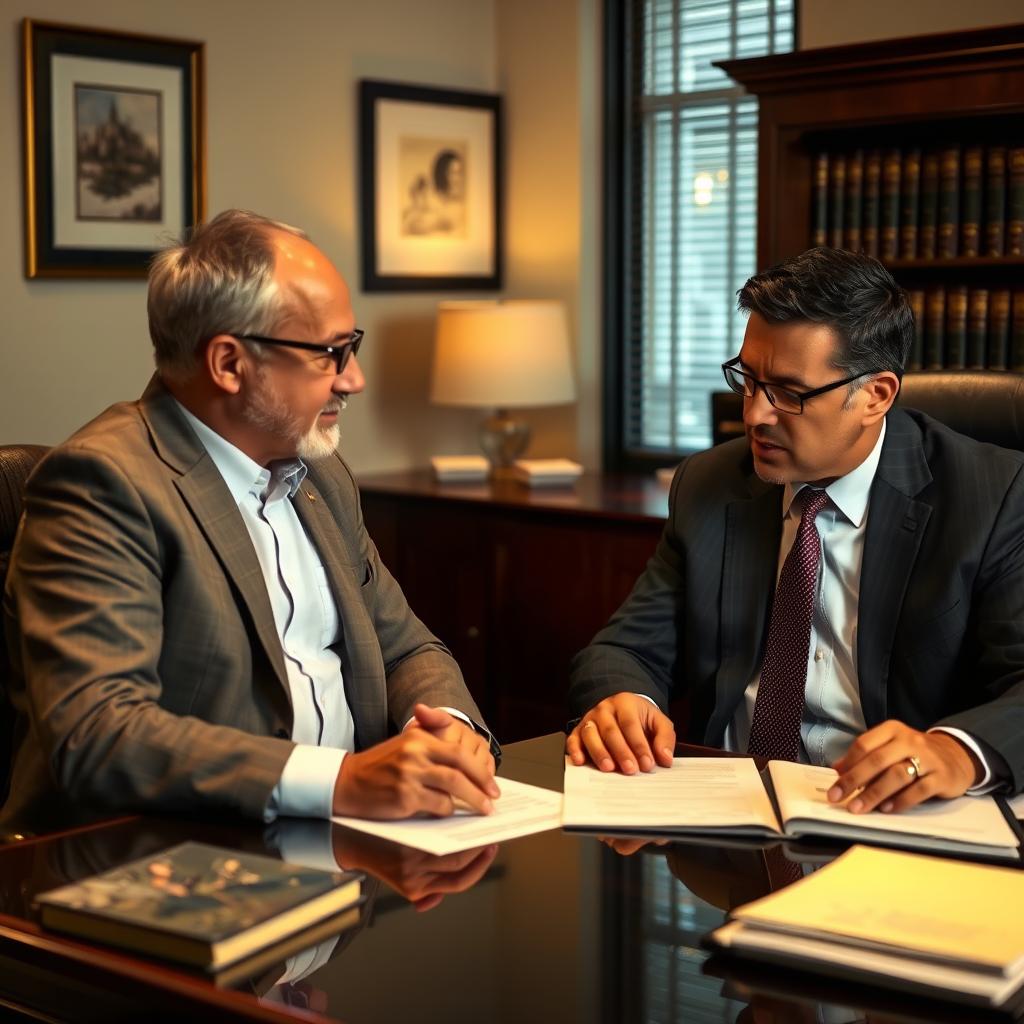
Grand Larceny Lawyer Bloomingdale, DC
In the District of Columbia, a grand larceny charge carries serious consequences, including the possibility of a felony conviction, a substantial term of incarceration, and a lasting criminal record. Bloomingdale residents who face a grand larceny allegation—whether arising from a theft, a shoplifting incident, or an alleged scheme to obtain property—need a defense that accounts for the unique structure of the District’s criminal justice system. Law Offices Of SRIS, P.C. has represented clients in criminal matters before the DC Superior Court since 1997. Mr. Sris, Owner and Founder of the firm, formerly served as a prosecutor, and his insight into how the United States Attorney’s Office for the District of Columbia builds its cases informs the firm’s approach at every stage. The firm’s Of Counsel attorneys bring additional depth in criminal defense and local court practice. If you or a family member is under investigation or has been charged with grand larceny in Bloomingdale, reach our location at (888) 437-7747 to schedule a consultation. Law Offices Of SRIS, P.C. – Advocacy Without Borders.
What Grand Larceny Means in Bloomingdale, DC
Grand larceny in the District of Columbia is a felony-level theft offense governed by D.C. Code Title 22. Unlike many states, the District does not have a separate “grand larceny” statute by name; instead, the offense falls under the general theft provisions that grade the charge by the value of the property taken. When the value of the property is $1,000 or more, the offense is treated as a felony, often referred to as theft in the first degree. A conviction can result in up to ten years of incarceration, along with fines, restitution, and a criminal record that may affect employment, housing, and professional licensing.
Because Washington, D.C. Is a federal territory, all local criminal prosecutions—including grand larceny cases arising in Bloomingdale—are handled by the United States Attorney’s Office for the District of Columbia, not by a locally elected district attorney. The Metropolitan Police Department makes arrests, and cases are heard at the DC Superior Court, located at 500 Indiana Avenue NW. The Pretrial Services Agency, a federal agency, conducts risk assessments and makes release recommendations rather than relying on a traditional cash bail system. This hybrid federal-local environment creates procedural nuances that an experienced defense team must navigate from the initial appearance through trial or resolution. Bloomingdale residents benefit from representation that understands both the statutory framework and the day-to-day practices of the Superior Court’s Criminal Division.
How Mr. Sris and the Firm’s Of Counsel Attorneys Handle Grand Larceny Cases
When a client in Bloomingdale contacts Law Offices Of SRIS, P.C. about a grand larceny matter, the legal team begins by gathering the charging documents, police reports, and any evidence the prosecution intends to use. Early intervention often shapes the direction of the case, whether that means engaging with the prosecutor to discuss potential resolutions, investigating the strength of identification evidence, or assembling documentation that challenges the claimed value of the property. Because the USAO-DC prosecutes these cases, the firm’s attorneys focus on the charging decisions and procedural requirements unique to the District.
The firm handles each stage—arraignment, pretrial motions, status hearings, and, if necessary, trial—with a focus on protecting the client’s rights and pursuing the trusted achievable outcome under the specific facts. Mr. Sris’s background as a former prosecutor gives the team a practical understanding of how the government evaluates evidence, weighs charging options, and negotiates plea offers. The firm’s Of Counsel attorneys contribute their own extensive trial and criminal-law experience, including challenges to witness credibility, forensic evidence, and the accuracy of value determinations. Throughout the process, the team keeps the client informed about likely procedural steps and available options so that decisions are made with a clear understanding of the risks and benefits.
About Mr. Sris and the Firm’s Of Counsel Attorneys
Mr. Sris founded Law Offices Of SRIS, P.C. in 1997 after serving as a prosecutor. He is admitted to practice in Virginia, Maryland, the District of Columbia, New Jersey, and New York, and he has built a multi-state law firm that concentrates on criminal defense and related practice areas. Mr. Sris testified before the Virginia House Courts of Justice Committee in support of 2019 HB 635 (chief patron Del. David Bulova), reflecting his engagement with the legislative process that shapes the legal landscape in which the firm practices.
The firm’s Of Counsel attorneys bring extensive combined experience in criminal defense, including representation in DC Superior Court. Collectively, Mr. Sris and the firm’s Of Counsel attorneys have documented case results across multiple practice areas since 1997. Results may vary. In any individual case. The team works collaboratively, drawing on the strengths of each attorney to develop and execute a defense strategy tailored to the circumstances of the Bloomingdale client and the particular grand larceny charge at issue.
Frequently Asked Questions
What is grand larceny in Washington, D.C.?
Grand larceny in Washington, D.C. Is a felony theft charge that applies when the value of the property taken is $1,000 or more, or when the theft involves a firearm regardless of value. The offense is prosecuted under D.C. Code Title 22, and it is often charged as theft in the first degree. The government must prove that the defendant knowingly took or obtained the property of another with the intent to permanently deprive the owner. The classification as a felony subjects a defendant to a potential sentence of up to ten years in prison, as well as fines and restitution. Because the charge hinges on the value of the allegedly stolen property, evidentiary disputes over valuation are common in these cases.
Who prosecutes grand larceny cases in D.C.?
Grand larceny cases in the District of Columbia are prosecuted by the United States Attorney’s Office for the District of Columbia (USAO-DC), not by a local district attorney. This is a distinctive feature of the District’s criminal justice system: because Washington, D.C. Is a federal territory, federal prosecutors handle violations of the D.C. Code. The Metropolitan Police Department investigates and makes arrests, after which Assistant United States Attorneys present the case to a grand jury for indictment in felony matters. The case is then adjudicated in the Criminal Division of the DC Superior Court. An attorney familiar with the USAO-DC’s charging practices and procedural expectations can provide meaningful guidance throughout the process.
How does the pretrial release process work in D.C. For a grand larceny charge?
Washington, D.C. Does not use cash bail; instead, the Pretrial Services Agency (PSA) assesses each defendant’s risk and recommends release conditions to the court. After an arrest, PSA conducts an interview and prepares a report that considers factors such as community ties, employment, prior criminal history, and the nature of the current charge. The judicial officer at the initial appearance then determines whether the defendant is released on personal recognizance, released with conditions (such as a stay-away order or electronic monitoring), or detained pending trial. The absence of a cash bail system means that advocacy during the pretrial phase focuses on presenting a persuasive case for release on the least restrictive conditions consistent with public safety and court appearance requirements.
What are the penalties for grand larceny in D.C.?
A conviction for grand larceny, typically charged as theft in the first degree, carries a maximum penalty of ten years in prison and a fine of up to under D.C. Law. The actual sentence imposed depends on the defendant’s criminal history, the circumstances of the offense, and any applicable sentencing guidelines. In addition to incarceration, a felony conviction results in a permanent criminal record that can affect employment opportunities, housing applications, and certain civil rights. The court may also order restitution to the victim. Because the potential consequences are severe, a thorough defense often involves challenging the valuation of the property, examining the evidence of intent, and exploring any procedural issues that may lead to a reduction or dismissal of the charge.
Can a grand larceny conviction be sealed in D.C.?
Sealing a grand larceny conviction in Washington, D.C. Is possible under D.C. Code § 16-803, but eligibility depends on the specific offense and the passage of a waiting period after completion of the sentence. For eligible convictions, the waiting period generally runs from the completion of incarceration, probation, or supervised release. Misdemeanor and certain felony convictions may be sealed if the statutory criteria are satisfied, and the court must find that sealing is in the interest of justice. Acquittals, dismissals, and nolle prosequi dispositions are sealable without a waiting period in many instances. Because the record-sealing rules are detailed and subject to change, anyone considering a petition should consult with an attorney to determine whether a particular grand larceny record qualifies.
Do I need a lawyer for a grand larceny charge in D.C.?
While an individual has the right to represent themselves, a grand larceny charge is a felony that can result in years of imprisonment, and legal representation is strongly advised. An attorney can evaluate the prosecution’s evidence, identify applicable defenses, negotiate with the USAO-DC, and, if necessary, present the case at trial. Because the District’s criminal procedures involve unique rules—including the pretrial services system and the federal prosecution of D.C. Code offenses—familiarity with local practice can make a significant difference in the course of a case. An early consultation allows the attorney to begin preserving evidence, interviewing witnesses, and developing a strategy before critical deadlines pass.
For guidance on your specific situation, reach Law Offices Of SRIS, P.C. at (888) 437-7747.
Related Criminal Defense Resources:
Criminal Lawyer Washington, D.C. •
Georgetown Criminal Defense •
Capitol Hill Criminal Lawyer •
Shaw DC Criminal Attorney •
Columbia Heights Criminal Defense
Primary Legal Sources:
D.C. Code Title 22 – Criminal Offenses •
DC Superior Court •
United States Attorney’s Office for the District of Columbia
Attorney advertising. Prior results do not guarantee a similar outcome. Case results depend on a variety of factors unique to each case. Results may vary.
Law Offices Of SRIS, P.C. serves clients in Bloomingdale and throughout the District of Columbia from our Arlington Location. By appointment: 1655 Fort Myer Dr, Suite 700, Room 719, Arlington, VA 22209. Call (888) 437-7747 to schedule.