
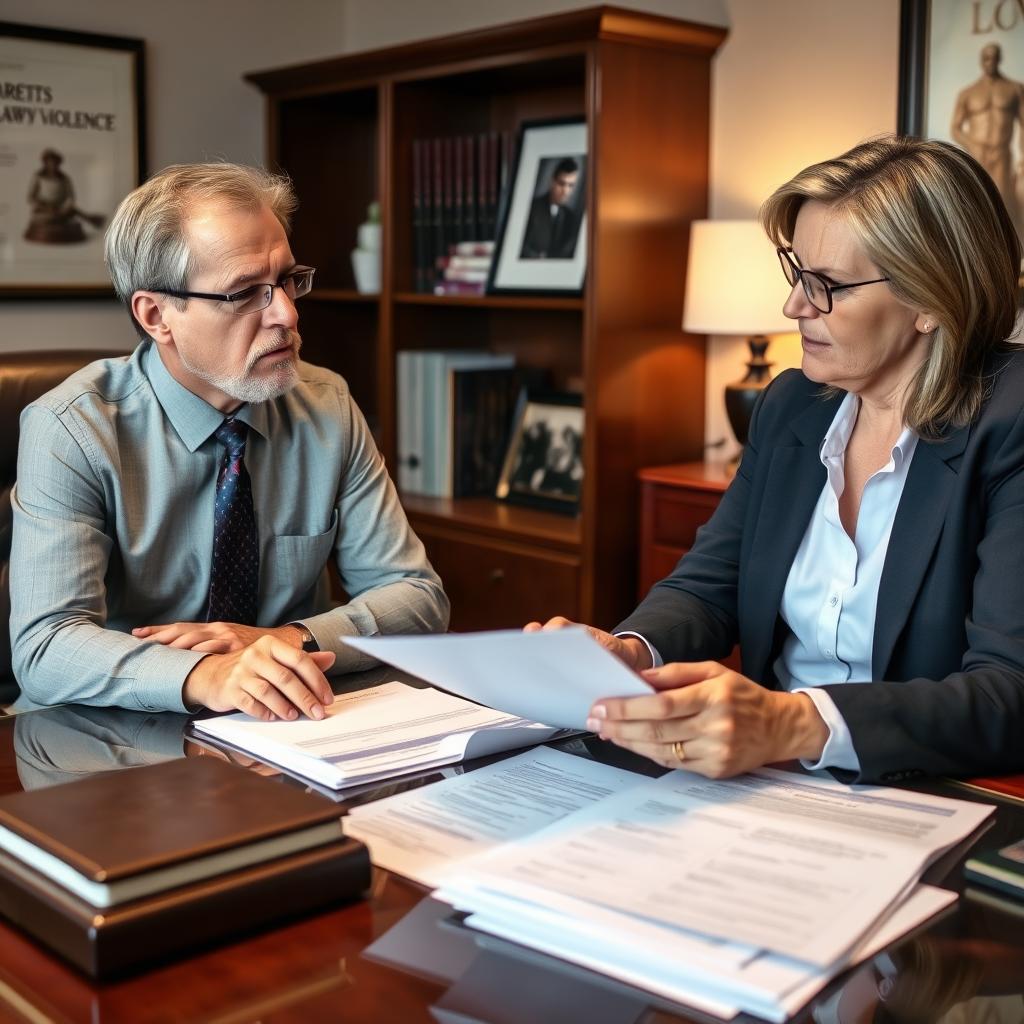
Domestic Violence Lawyer Louisa County, VA
Facing a domestic violence charge in Louisa County, Virginia, brings immediate legal and personal consequences. A conviction under Va. Code § 18.2-57.2 can result in jail time, a fine of up to $2,500, and a lasting criminal record. Beyond the courtroom, a finding of guilt triggers a federal firearm prohibition and may affect employment, housing, and immigration status. Law Offices Of SRIS, P.C. represents clients in Louisa County General District Court and Louisa County Circuit Court. Our Richmond location serves Louisa County, and Mr. Sris and his Of Counsel team have documented 2 favorable outcomes in the county’s courts—1 dismissal and 1 charge amended. Results may vary. For a consultation about a domestic violence matter, call (888) 437-7747. Law Offices Of SRIS, P.C. — Advocacy Without Borders.
What Domestic Violence Means in Louisa County, Virginia
Under Virginia law, domestic violence most often refers to an assault and battery against a family or household member, defined in Va. Code § 18.2-57.2. A household member includes a spouse, former spouse, parent, child, stepchild, sibling, grandparent, grandchild, in‑law who lives in the same home, or a person with whom the accused has a child or has cohabited within the past 12 months. The offense is a Class 1 misdemeanor for a first or second offense, punishable by up to 12 months in jail and a fine of up to $2,500. A third conviction within 20 years is a Class 6 felony, which carries a term of imprisonment of 1 to 5 years.
Louisa County General District Court is currently presided over by Hon. Claiborne H. Stokes Jr. Court hours: Mon-Fri 8:30AM-4:30PM. Counsel appearing on criminal matters should plan filings accordingly.
Misdemeanor domestic violence charges are heard in the Louisa County General District Court at 100 West Main Street, Louisa, VA 23093. Felony charges and appeals from General District Court are tried in Louisa County Circuit Court. The Commonwealth’s Attorney for Louisa County prosecutes these cases. An allegation of domestic violence often leads to an emergency protective order, and the court may impose a condition of bond that prohibits contact with the alleged victim. Mr. Sris and his Of Counsel appear regularly in these courts and are familiar with local practice.
How Mr. Sris and His Of Counsel Handle Domestic Violence Cases
Mr. Sris and his Of Counsel approach every domestic violence case by thoroughly examining the evidence and the legal foundation of the charge. Many cases begin with a 911 call and statements made in the heat of the moment. The defense team evaluates whether the arrest was supported by probable cause, whether witness accounts are consistent, and whether any physical evidence corroborates the alleged assault. Procedural compliance is reviewed: if law enforcement failed to follow required protocols, the charge may be vulnerable to dismissal or reduction.
A critical strategic consideration in any domestic violence case is the federal firearm disability imposed by 18 U.S.C. § 922(g)(9) upon a conviction under § 18.2-57.2. An amendment to simple assault and battery under § 18.2-57, where supported by the facts and agreed to by the Commonwealth’s Attorney, preserves the right to possess firearms. Mr. Sris and his Of Counsel also explore eligibility for the first‑offender program under Va. Code § 18.2-57.3, which permits a deferred disposition and, upon successful completion, dismissal of the charge. Every defense strategy is tailored to the specific facts of the case and the client’s goals.
About Mr. Sris and His Of Counsel Team
Mr. Sris, Owner and Founder of Law Offices Of SRIS, P.C., has practiced law since 1997. A former prosecutor, he brings first‑hand trial experience to every criminal defense matter. He is admitted to practice in Virginia, Maryland, the District of Columbia, New Jersey, and New York. Mr. Sris testified before the Virginia House Courts of Justice Committee in support of 2019 HB 635 (chief patron Del. David Bulova).
Mr. Sris and his Of Counsel team bring over 120 years of combined legal experience and have achieved 4,739+ documented firm-wide results. Results may vary. The firm’s Richmond location serves clients throughout Louisa County. All attorneys are engaged through the firm’s Of Counsel structure, ensuring that every client benefits from focused attention and collaboration.
Frequently Asked Questions
What constitutes domestic violence under Virginia law?
Domestic violence in Virginia is generally charged as assault and battery against a family or household member under Va. Code § 18.2-57.2. The offense includes any unwanted physical contact or threat of contact against a spouse, former spouse, parent, child, stepchild, sibling, grandparent, grandchild, in‑law who lives in the same home, or person with whom the accused shares a child or has cohabited within the past 12 months. The charge does not depend on the severity of injury; even a shove or a grabbed wrist can support a prosecution.
What are the penalties for domestic violence in Louisa County?
A first or second domestic violence conviction is a Class 1 misdemeanor, punishable by up to 12 months in jail and a fine of up to $2,500. A third conviction within 20 years is a Class 6 felony, carrying 1 to 5 years of incarceration. The court may also order anger management or batterer intervention programs, impose a protective order, and require restitution. In Louisa County, the General District Court has jurisdiction over misdemeanor trials; the Circuit Court handles felony cases.
Can a first‑offense domestic violence charge be dismissed?
Yes, Virginia law permits deferred disposition for a first offense under Va. Code § 18.2-57.3. With the defendant’s consent, the judge may defer the proceedings and place the defendant on probation, typically for a period of 12 months, with conditions such as an education or treatment program. If the defendant completes the conditions successfully, the court discharges the defendant and dismisses the charge. An experienced defense attorney can present the request and advocate for this outcome.
How can a lawyer defend against a domestic violence charge?
A defense attorney challenges the prosecution’s evidence, scrutinizes police procedures, and negotiates with the Commonwealth’s Attorney. Common defenses include disputing that any assault occurred, arguing that the contact was accidental, or demonstrating that the alleged victim was the aggressor. Where the facts permit, the attorney may also pursue an amendment to simple assault under § 18.2-57, which avoids the federal firearm disability triggered by a § 18.2-57.2 conviction. Each case is evaluated on its own merits.
Does a domestic violence conviction affect gun rights?
A conviction under Va. Code § 18.2-57.2 triggers a lifetime federal firearm prohibition under 18 U.S.C. § 922(g)(9). The Lautenberg Amendment applies to any misdemeanor crime of domestic violence. An amendment of the charge to simple assault under § 18.2-57, however, does not trigger the federal ban. Because the loss of firearm rights can be permanent, this issue is a central consideration during plea negotiations in domestic violence cases.
What should I do if I am facing a domestic violence charge in Louisa County?
Contact a defense attorney immediately and do not discuss the facts of the case with anyone except your lawyer. Preserve any text messages, emails, or photographs that could be relevant. Do not communicate with the alleged victim in violation of any protective order. Early involvement of counsel can influence bond conditions, the scope of discovery, and the way the Commonwealth’s Attorney evaluates the case. Law Offices Of SRIS, P.C. may be reached at (888) 437-7747.
Outbound primary‑source authority: Virginia Code Title 18.2 (Crimes and Offenses) · Louisa County General District Court · Virginia Courts
Attorney advertising. Prior results do not guarantee a similar outcome.
Case results depend on a variety of factors unique to each case.
Results may vary.