
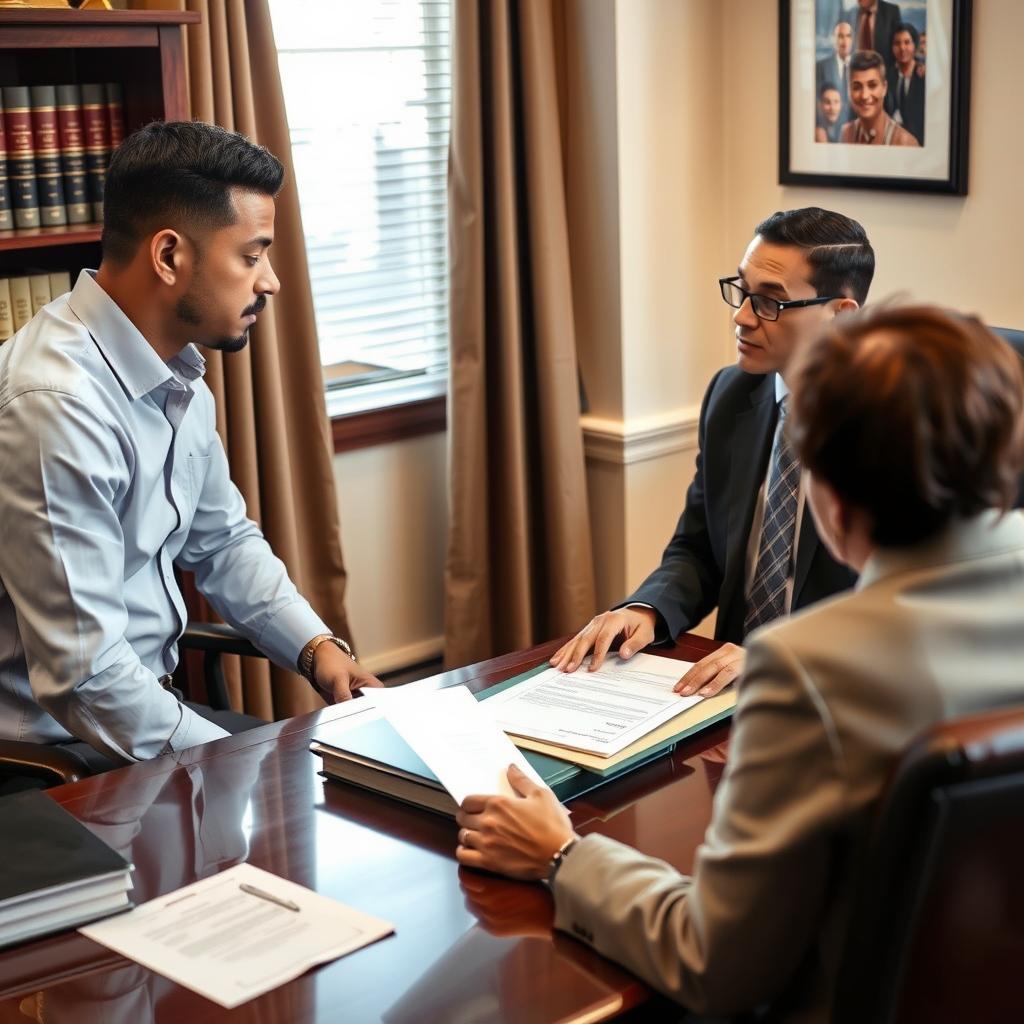
DWI Lawyer Wesley Heights, DC
If you are facing a DWI charge in the Wesley Heights neighborhood of Washington, D.C., the consequences can be serious. A conviction may affect your driver’s license, your employment, and your freedom. At Law Offices Of SRIS, P.C., Mr. Sris and the firm’s Of Counsel attorneys understand how DWI cases are prosecuted in the District of Columbia—a unique jurisdiction where local criminal offenses are handled by federal prosecutors. From the initial traffic stop through proceedings at D.C. Superior Court, having experienced legal counsel on your side matters. To discuss your situation and your options, reach Law Offices Of SRIS, P.C. at (888) 437-7747. Law Offices Of SRIS, P.C. – Advocacy Without Borders.
What DWI Means in Wesley Heights, DC
Wesley Heights, a residential neighborhood in Northwest Washington, D.C., is bordered by Massachusetts Avenue and adjacent to the Spring Valley and Palisades communities. DWI—driving while intoxicated—is treated as a criminal offense under D.C. Law. Unlike some states that distinguish between DUI and DWI based on the level of intoxication, the District uses a single statutory framework that covers operating a vehicle while impaired by alcohol, drugs, or a combination of both. The core prohibition is found in the District of Columbia traffic code, and prosecutors from the United States Attorney’s Office for the District of Columbia pursue these cases in D.C. Superior Court, located at 500 Indiana Avenue NW.
Because the District is not a state, the criminal justice system blends federal prosecution authority with a local court structure. The Pretrial Services Agency, a federal agency, handles release decisions for most defendants, and D.C. Does not rely on a traditional cash-bail system. For someone charged in Wesley Heights, a DWI arrest will typically lead to an initial appearance at the courthouse within a day, and the case will proceed through the Criminal Division of D.C. Superior Court. Understanding how the prosecution builds its case—often relying on field sobriety tests, chemical test results, and officer observations—is a critical part of preparing a defense.
How Mr. Sris and the Firm’s Of Counsel Attorneys Handle DWI Cases
When a client contacts Law Offices Of SRIS, P.C. about a DWI charge in Wesley Heights, the first step is a thorough review of the facts. This includes examining the reason for the traffic stop, the administration of field sobriety exercises, whether proper procedures were followed during any breath or blood testing, and the calibration and maintenance records of the equipment used. The firm’s approach is to identify factual and legal issues that may weaken the prosecution’s case. In some matters, that means negotiating with the prosecutor for a reduced charge or an alternative disposition; in others, it means preparing for trial and challenging the evidence.
The legal team appears regularly in D.C. Superior Court and is familiar with the practices of the Criminal Division. Mr. Sris, a former prosecutor, brings insight into how the government evaluates cases. The firm’s Of Counsel attorneys contribute additional experience across criminal defense, complex motion practice, and trial work. Every DWI matter is handled with attention to the client’s goals—whether that is avoiding a conviction, minimizing the impact on a driver’s license, or limiting the personal and professional consequences that can follow a DWI arrest. Mr. Sris and the firm’s Of Counsel attorneys bring extensive combined legal experience to DWI defense; results vary, and prior outcomes do not guarantee a similar result in your case.
About Mr. Sris and the Firm’s Of Counsel Attorneys
Mr. Sris, Owner and Founder of Law Offices Of SRIS, P.C., is a former prosecutor admitted to practice in Virginia, Maryland, the District of Columbia, New Jersey, and New York. Since 1997, he has concentrated his practice on criminal defense and related matters. Mr. Sris testified before the Virginia House Courts of Justice Committee in support of 2019 HB 635 (chief patron Del. David Bulova). The firm’s Of Counsel attorneys are experienced litigators who collaborate on DWI and criminal cases, bringing additional depth in evidence analysis, trial strategy, and negotiations.
For a DWI charge in Wesley Heights, the client benefits from a defense team that understands the federal prosecution model unique to the District. The firm’s location—serving D.C. Clients from its Arlington, Virginia, location—is approximately 4.5 miles from D.C. Superior Court, allowing convenient access for court appearances and meetings. To speak with Mr. Sris or the firm’s Of Counsel attorneys about your situation, call (888) 437-7747.
Frequently Asked Questions
What is the difference between DWI and DUI in Washington, D.C.?
In the District of Columbia, the terms DWI (driving while intoxicated) and DUI (driving under the influence) are often used interchangeably, but the operative statute covers operating a vehicle while impaired by alcohol, drugs, or both. The prosecution must prove that the driver’s ability to operate the vehicle was impaired to a noticeable degree. A separate charge can arise when a driver has a blood alcohol concentration at or above the legal limit. The distinction matters because the government may pursue conviction on either theory, and the penalties can be significant regardless of which specific charge appears on the citation.
What are the penalties for a first-offense DWI in D.C.?
A first-offense DWI conviction in the District of Columbia can carry consequences that include incarceration, monetary penalties, and driver’s license sanctions. The court has discretion within statutory ranges, and the actual sentence depends on factors such as the driver’s blood alcohol concentration, whether there was an accident, and whether any prior offenses exist. License suspension or revocation is common, and court-ordered alcohol education or treatment programs may be required. Because the consequences vary based on the specific facts, speaking with an attorney about your case is important.
Can I refuse a breath test during a DWI stop in D.C.?
Refusing a chemical test after a lawful arrest for DWI in the District of Columbia can result in administrative penalties separate from the criminal charge. Under D.C.’s implied consent law, a driver is deemed to have consented to testing. While a refusal may mean that prosecutors lack a specific blood alcohol reading, the refusal itself can be introduced as evidence at trial and can lead to license suspension through the Department of Motor Vehicles. The decision to refuse has legal implications, and consulting with counsel promptly after an arrest is recommended.
How can a DWI lawyer help in Wesley Heights?
An attorney can investigate the traffic stop, challenge the reliability of the evidence, and negotiate with the prosecutor to seek a reduction or dismissal of the charge. In D.C. Superior Court, DWI cases involve procedural rules, evidentiary requirements, and deadlines. An experienced defense lawyer can identify weaknesses in the prosecution’s case, such as an invalid stop or improperly administered field sobriety tests. For a client in Wesley Heights, having a lawyer who regularly appears in the District’s courts can help navigate the process and work toward a favorable outcome.
What should I do if I am stopped for suspected DWI in the District?
If you are stopped, remain calm, provide your license and registration when asked, and be aware that you have a right not to answer potentially incriminating questions. You may politely decline to perform field sobriety tests, though refusal can have consequences. After an arrest, the most important step is to contact an experienced criminal defense lawyer as soon as possible. Early intervention can affect bond conditions, evidence preservation, and the timing of the initial court appearance.
Is a DWI a criminal offense in the District of Columbia?
Yes, a DWI is a criminal offense in Washington, D.C., prosecuted by the United States Attorney’s Office for the District of Columbia. Unlike some jurisdictions where a first-offense DUI is a traffic infraction, the District treats driving while impaired as a crime that can result in a permanent record if a conviction is entered. The matter is heard in the Criminal Division of D.C. Superior Court, and defendants have the right to counsel. Because of the criminal nature of the charge, the stakes are high, and qualified legal representation is essential.
Attorney advertising. Prior results do not guarantee a similar outcome.
Results may vary.
Case results depend on a variety of factors unique to each case.