
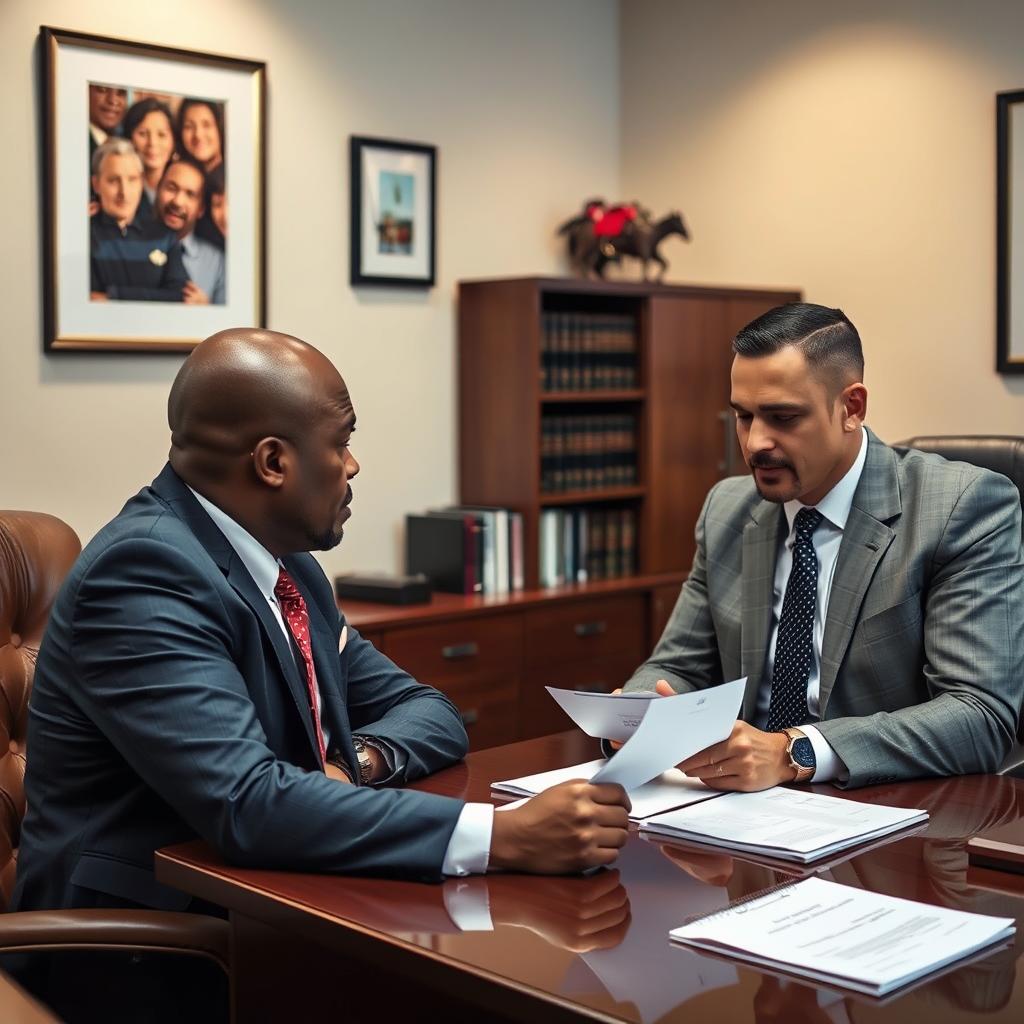
Escape from Custody Lawyer Anacostia, DC
If you are facing an escape from custody charge in Anacostia, Washington DC, reach Law Offices Of SRIS, P.C. at (888) 437-7747 to request a consultation. Law Offices Of SRIS, P.C. – Advocacy Without Borders.
Admitted in Virginia, Maryland, the District of Columbia, New Jersey, and New Jersey. Founded in 1997. By appointment only.
Escape from Custody Charges in Anacostia, Washington DC
Anacostia residents facing an escape from custody allegation encounter a criminal justice system that is distinct from any other American city. The United States Attorney’s Office for the District of Columbia—a federal prosecutor, not a local district attorney—brings charges under D.C. Code Title 22. Cases are heard at the D.C. Superior Court, 500 Indiana Avenue NW. The Pretrial Services Agency, a federal agency, makes release recommendations without traditional cash bail. This layered federal‑local structure demands an understanding of both D.C. Code offenses and the procedural practices of the Superior Court.
Law Offices Of SRIS, P.C. has represented individuals in criminal matters throughout the District of Columbia since the firm’s founding. Mr. Sris and his Of Counsel bring extensive experience to these defense cases, including allegations of escape. They understand how the U.S. Attorney’s Office constructs these cases and how to present an effective defense from the initial appearance through trial. When government asserts that an individual departed from lawful custody or failed to return after a permitted absence, having an experienced attorney familiar with D.C. Superior Court practice can make a significant difference.
Understanding Escape from Custody Under DC Law
Escape from custody is defined under the D.C. Criminal Code. The offense generally involves departing from or failing to return to a designated place after being lawfully detained, arrested, or incarcerated. The charging instrument may allege that a person left a correctional facility without authorization, escaped from a transport vehicle, or failed to return from a work-release or furlough program. The prosecution must prove that the defendant was in lawful custody at the time and intentionally left or failed to return.
The classification of the charge—misdemeanor or felony—may depend on the nature of the underlying detention and whether force or threat was used. Cases where the individual was being held for a felony offense or used violence to escape may carry more severe allegations. The D.C. Code does not use cash bail; instead, the Pretrial Services Agency assesses risk and makes a recommendation to the court. A person charged with escape may be held pending trial if the court finds a risk of non‑appearance or danger to the community.
Penalties and Consequences of Escape in the District of Columbia
A conviction for escape from custody can have serious repercussions. Sentencing is determined by the judge after a review of the defendant’s criminal history, the circumstances of the escape, and any aggravating factors. The potential penalties may include a period of incarceration, probation, fines, and restitution. A felony conviction carries additional collateral consequences, such as limitations on employment, housing, and federal benefits.
In addition to the direct sentence, an escape conviction can affect pending or future criminal cases. The government may argue that the offense demonstrates a disregard for court orders, influencing bail arguments in other matters. It is important to understand that D.C. Superior Court judges retain sentencing discretion, and every case is decided on its own facts. An experienced defense attorney can present mitigating evidence and advocate for a fair outcome.
How the DC Superior Court Handles Escape Cases
After an arrest on an escape charge, the defendant is brought before a Superior Court judge for a presentment or initial appearance. The judge informs the defendant of the charge, addresses release conditions, and sets a status date. Because D.C. Does not use cash bail, the court relies on the Pretrial Services Agency’s risk assessment to decide whether to release the individual under supervision or to detain the person pending trial.
The pretrial process may include discovery exchanges, motions practice, and status conferences. If the case is not resolved, it proceeds to a trial before a judge or a jury. Throughout the process, the U.S. Attorney’s Office for D.C. Is responsible for proving the elements of the offense beyond a reasonable doubt. A defense attorney can challenge the evidence, examine the lawfulness of the underlying custody, and raise defenses such as misidentification, duress, or the absence of intent to escape. Each stage of the proceeding benefits from close attention to the specific practices of the Superior Court.
How Mr. Sris and His Of Counsel Approach Escape Cases
Mr. Sris and his Of Counsel analyze every escape charge by following the evidence from the moment of the alleged custody departure. They examine whether the government can establish lawful custody, whether the defendant acted intentionally, and whether any procedural violations occurred during the arrest or booking process. They also assess whether any statement made by the defendant was obtained in compliance with constitutional standards.
If the evidence supports negotiation, the firm’s attorneys engage with the U.S. Attorney’s Office to seek a reduction or dismissal of the charge. In cases where trial is appropriate, they prepare a thorough defense that may include witness testimony, documentary evidence, and experienced attorney opinions where needed. Mr. Sris and his Of Counsel work toward a favorable resolution, always mindful that each client’s circumstances are unique. They appear regularly in D.C. Superior Court and are familiar with the expectations of the judges and prosecutors who handle escape cases.
About Mr. Sris and the Firm’s Of Counsel Attorneys
Mr. Sris, Owner and Founder of Law Offices Of SRIS, P.C., has practiced criminal law since 1997. He is admitted in Virginia, Maryland, the District of Columbia, New Jersey, and New York. As a former prosecutor, he understands the approach the government takes in building an escape prosecution and uses that insight to plan defense strategy. Mr. Sris testified before the Virginia House Courts of Justice Committee in support of 2019 HB 635 (chief patron Del. David Bulova).
The firm’s Of Counsel attorneys bring significant litigation experience to every case. They have represented clients in D.C. Superior Court across a range of criminal matters, including serious felonies and complex procedural challenges. Together, Mr. Sris and his Of Counsel provide a defense team that is prepared to address the legal and factual complexities of an escape charge. The firm serves Anacostia and all other neighborhoods in Washington DC from its Arlington location, by appointment. Reach the firm at (888) 437-7747 to schedule a consultation.
Frequently Asked Questions
What is the crime of escape from custody in DC?
Escape from custody in Washington DC occurs when a person, while lawfully detained or imprisoned, intentionally departs from custody without authorization or fails to return after a temporary release. The offense is codified in D.C. Code Title 22. It may be charged as a misdemeanor or a felony depending on factors such as whether force was used and the nature of the underlying detention. The United States Attorney’s Office for D.C. Prosecutes these cases in the Superior Court. For guidance on your specific situation, reach Law Offices Of SRIS, P.C. at (888) 437-7747.
What are the potential penalties for an escape conviction in Washington DC?
A person convicted of escape from custody in the District of Columbia may face incarceration, probation, fines, and a lasting criminal record, with the severity depending on the charge’s classification and the defendant’s history. Because D.C. Judges retain sentencing discretion, the ultimate penalty is determined after considering the evidence and any mitigating factors. Beyond the sentence, a conviction can affect employment, housing, and firearm rights. Each case is unique; an experienced attorney can explain the potential range based on the specific facts.
How does the DC court process work after an arrest for escape?
After an arrest for escape, the individual appears before a D.C. Superior Court judge for an initial presentment, at which the charge is stated and release conditions are set based on a Pretrial Services Agency risk assessment. Because D.C. Does not use cash bail, the court may release the person under supervision or order detention. The case then proceeds through status conferences, discovery, and motion hearings. If no resolution is reached, the matter goes to trial. To discuss the details of your matter, contact Law Offices Of SRIS, P.C. at (888) 437-7747.
Does DC have cash bail for escape from custody cases?
No—Washington DC does not use a traditional cash bail system for any criminal charge, including escape. Instead, the Pretrial Services Agency, a federal entity, conducts a risk assessment and advises the court on release. Most defendants, including those charged with non‑violent escape, may be released on recognizance or under supervised release conditions. Detention is ordered only if the court finds a risk of non‑appearance or danger to the community.
Can I seal my record after an escape conviction in DC?
It may be possible to seal certain escape‑related records under D.C. Code § 16‑803, particularly if the case ended in acquittal, dismissal, or qualifies under the waiting‑period rules. Convictions for some offenses may become eligible for sealing after a statutory period, provided no other ineligible offense is on the person’s record. Marijuana offenses have expanded sealing eligibility, but that does not extend to escape. For a consultation, reach Mr. Sris and his Of Counsel at (888) 437-7747.
What is the difference between escape and resisting arrest in DC?
Escape from custody involves leaving lawful custody after having been detained or imprisoned, while resisting arrest involves actively opposing or interfering with an officer’s attempt to take a person into custody. Resisting arrest is a separate offense under D.C. Law and may involve physical force, threats, or simply fleeing from an officer’s command to stop. Both can be serious, but the elements and potential penalties differ. An attorney can evaluate whether the facts support one charge over the other.
Do I need a lawyer for an escape from custody charge in Anacostia?
Yes—retaining an experienced criminal defense lawyer is strongly recommended when facing an escape charge in Anacostia or anywhere in Washington DC. The U.S. Attorney’s Office prosecutes these cases vigorously, and the stakes are high. An attorney can challenge the government’s evidence, negotiate for a favorable resolution, and protect your rights throughout the process. Even if the case appears straightforward, the procedural nuances of the Superior Court are most effectively handled with professional representation.
How can a criminal defense lawyer help with an escape charge?
A defense lawyer can investigate the facts, identify weaknesses in the prosecution’s evidence, file motions to exclude improperly obtained statements or evidence, negotiate with the U.S. Attorney, and present a strong defense at trial. For escape cases, key areas of examination often include the lawfulness of the original custody, whether the defendant had an opportunity to leave voluntarily, and whether there was adequate notice of the return requirement. Mr. Sris and his Of Counsel are prepared to evaluate each of these aspects.
Where are escape cases heard in Washington DC?
Escape cases are heard at the D.C. Superior Court, located at 500 Indiana Avenue NW, Washington, DC 20001. This unified trial court handles all local criminal offenses under the D.C. Code. The courthouse is across from Judiciary Square Metro station. The firm serves clients from Anacostia and all other D.C. Neighborhoods by appointment from its Arlington location. Call (888) 437-7747 to arrange a meeting.
What should I do if I am accused of escape from custody?
If you are accused of escape, promptly contact an attorney and avoid discussing the allegations with anyone except your lawyer. Statements made to law enforcement, jail staff, or others can be used against you. Your attorney can advise you on how to respond to interviews and court appearances. Early involvement of counsel often leads to better outcomes, including preserving release arguments at the initial presentment. Reach the firm at (888) 437-7747 for immediate guidance.
Additional local defense resources: