
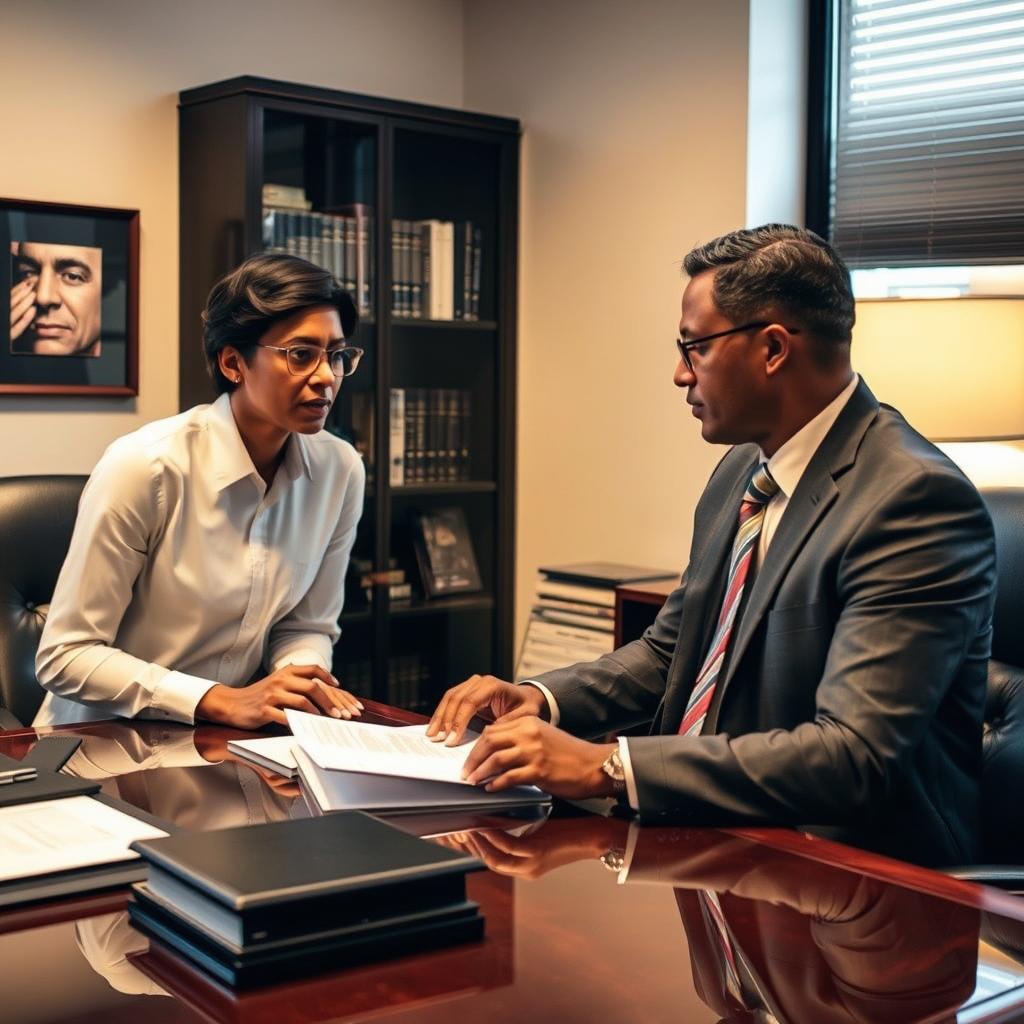
Graffiti Defense Lawyer Dupont Circle, DC
Facing a graffiti charge in Dupont Circle, Washington, D.C., puts you in a unique legal position. Crimes under the D.C. Code are prosecuted by the United States Attorney’s Office for the District of Columbia — federal prosecutors handling local offenses — at the DC Superior Court. A graffiti or vandalism conviction can result in jail time, fines, and a permanent criminal record that affects employment, housing, and professional licensing. Law Offices Of SRIS, P.C., a multi-state firm practicing since 1997, represents individuals charged with graffiti and property-damage offenses in Dupont Circle and throughout the District. Mr. Sris and his Of Counsel bring extensive combined legal experience to graffiti defense. Results may vary. Call (888) 437-7747 to request a consultation.
Law Offices Of SRIS, P.C. – Advocacy Without Borders.
What Graffiti Defense Means in Dupont Circle, DC
Dupont Circle is one of Washington, D.C.’s most culturally and commercially active neighborhoods, anchoring a corridor that includes Embassy Row, Kalorama, and Logan Circle. Criminal cases arising in Dupont Circle are heard at the DC Superior Court, Criminal Division, located at 500 Indiana Avenue NW — just two blocks from the Judiciary Square Metro station on the Red Line. Because Washington, D.C., operates as a federal territory, local criminal prosecutions are conducted not by a district attorney’s office, but by the United States Attorney’s Office for the District of Columbia. That distinctive structure means defendants face a federal-prosecution framework even for offenses brought under the D.C. Code.
Graffiti-related charges in the District typically stem from allegations of defacing public or private property without the owner’s consent. Under D.C. Code Title 22, such conduct can be charged as destruction of property, vandalism, or related offenses depending on the value of the damage, the nature of the property, and the defendant’s history. The DC Superior Court handles these matters through its Calendar Control system, with pretrial release decisions governed by the Pretrial Services Agency — the District does not use a cash-bail model. Our attorneys appear regularly at DC Superior Court; the firm’s Arlington, Virginia, location, about 4.5 miles from the courthouse, serves clients in Dupont Circle and across the District. The firm’s proximity, combined with its multi-state practice, allows it to represent individuals who live, work, or attend school in the neighborhood while navigating the local court’s procedures.
Dupont Circle’s density of restaurants, boutiques, embassies, and historic buildings means that property owners, business associations, and community groups often take an active interest in vandalism prosecutions. A conviction can also expose a defendant to restitution claims and civil liability. Mr. Sris and his Of Counsel evaluate each case by examining the evidence of intent, the value of alleged damage, the identification procedures used by law enforcement, and any constitutional protections that apply to stops, searches, or interrogations. Experienced representation early in the process can influence how the government charges the offense and whether pretrial diversion is a possibility.
How Mr. Sris and His Of Counsel Handle Graffiti Defense Cases
Every criminal case in DC Superior Court begins with the filing of a complaint or information by the United States Attorney’s Office. The court then schedules an arraignment, and if the defendant is not released on personal recognizance or pretrial supervision, the Pretrial Services Agency sets release conditions. Mr. Sris and his Of Counsel intervene early — often before the initial presentment — to assess the government’s evidence and to negotiate with the prosecutor. In graffiti and vandalism cases, the government must prove that the defendant intentionally defaced property belonging to another person. Many cases turn on witness identification, the reliability of video evidence, the ownership of the property, or whether the conduct falls within permitted artistic or expressive activity.
When prosecutors are unable to establish each element beyond a reasonable doubt, the firm advocates for a dismissal or a reduction of the charges. In some instances, clients may be eligible for deferred prosecution, community service, or restitution-based outcomes that avoid a criminal conviction. Mr. Sris and his Of Counsel also advise clients on the immigration consequences that can accompany a conviction for a crime involving moral turpitude. Because DC is not a state, certain federal collateral consequences — including those related to federal student aid, federal employment, or security clearances — can be particularly severe. The firm’s multi-state practice enables it to represent clients whose DC case is one piece of a broader multi-jurisdiction legal situation.
About Mr. Sris and His Of Counsel
Mr. Sris, Owner and Founder of Law Offices Of SRIS, P.C., founded the firm in 1997 and is a former prosecutor. He is admitted in Virginia, Maryland, the District of Columbia, New Jersey, and New York. Mr. Sris and his Of Counsel bring extensive combined legal experience to criminal defense in the DC Superior Court and in federal courts across the jurisdictions the firm serves. Their work is informed by a deep familiarity with the DC criminal process — from the unique role of the United States Attorney’s Office to the Pretrial Services Agency’s release procedures and the sentencing practices of the local bench.
Because DC prosecutions combine federal resources with a local statutory code, a defense strategy must account for both the D.C. Code’s substantive provisions and the procedural dynamics of a federally staffed prosecution. Mr. Sris and his Of Counsel approach every graffiti and vandalism case with a thorough review of the charging document, the discovery materials, and any collateral implications. Clients in Dupont Circle and throughout the District receive the firm’s full attention and the benefit of its multi-state perspective. Call (888) 437-7747 to schedule a consultation.
Frequently Asked Questions
What constitutes graffiti in Washington, D.C.?
Graffiti — painting, writing, or drawing on property without the owner’s consent — is typically prosecuted as destruction of property or vandalism under D.C. Code Title 22. The government must prove that the defendant intentionally defaced, damaged, or destroyed someone else’s property. Whether the charge is a misdemeanor or a felony depends on the value of the damage and the defendant’s criminal history. Even chalk or temporary markings can be charged if they result in cleanup costs. Because the United States Attorney’s Office prosecutes these cases, defendants face the resources of a federal agency.
What are the penalties for a graffiti conviction in DC?
Penalties for graffiti and vandalism in the District of Columbia range from fines and probation for minor damage to incarceration for more serious offenses. A misdemeanor conviction can carry up to 180 days in jail and a fine of up to $1,000, while a felony conviction can result in a sentence of more than one year and significantly higher fines. In addition to criminal penalties, the court can order the defendant to pay restitution to the property owner. A conviction also creates a permanent criminal record that can affect employment, housing, and immigration status.
Do I need a lawyer for a graffiti charge in Dupont Circle?
While you are not legally required to hire an attorney, having experienced counsel for a graffiti charge in DC is critical because the United States Attorney’s Office prosecutes these cases actively. An attorney can challenge the strength of the identification evidence, the valuation of the property damage, and any constitutional violations during the investigation. An attorney can also negotiate with the prosecutor for a dismissal, a reduction of the charges, or an alternative disposition that avoids a criminal record. Mr. Sris and his Of Counsel help clients navigate the DC Superior Court process and work toward favorable outcomes. Results may vary.
How does Law Offices Of SRIS, P.C. Approach graffiti defense cases?
Law Offices Of SRIS, P.C. begins each graffiti defense case with a thorough factual investigation, examining whether the government can prove each element of the charged offense beyond a reasonable doubt. The firm reviews all evidence — photographs, video, witness statements, and police reports — and files appropriate motions to suppress evidence obtained in violation of the Fourth Amendment. When a trial is unavoidable, Mr. Sris and his Of Counsel prepare a defense that challenges the government’s case on grounds such as mistaken identity, lack of intent, or insufficient proof of the property owner’s lack of consent. Early involvement gives the defense time to build a stronger position.
What should I do if I am accused of graffiti in Dupont Circle?
If you are accused of graffiti in Dupont Circle, remain calm, do not discuss the allegation with the police, and request an attorney immediately. You have the right to remain silent and to consult with counsel before answering any questions. Do not post about the incident on social media or speak to witnesses until you have received legal advice. Contact Law Offices Of SRIS, P.C. at (888) 437-7747 to request a consultation as soon as possible. Early intervention often opens the door to pretrial resolution options that may not be available later.
How does the court process work for a graffiti case in DC?
A graffiti case in the District of Columbia begins with an arrest or a summons requiring the defendant to appear at DC Superior Court for an arraignment. At arraignment, the defendant is informed of the charges and enters a plea. The United States Attorney’s Office provides initial discovery, and the case proceeds through status hearings, motion dates, and eventually a trial or plea disposition. DC’s Pretrial Services Agency conducts a risk assessment to recommend release conditions. Timelines vary by case complexity and the court’s calendar, but Mr. Sris and his Of Counsel guide clients through each stage of the process.
Additional Criminal Defense Resources in Washington, D.C.
Our firm handles criminal defense matters across many DC neighborhoods. Visit our pages for Washington, D.C. Criminal defense, Georgetown criminal lawyer, Cleveland Park criminal lawyer, and Chevy Chase DC criminal defense.
For authoritative information on DC criminal statutes, visit the official D.C. Code Title 22. Court procedures and forms are available at DC Superior Court.
Attorney advertising. Prior results do not guarantee a similar outcome. Results may vary.
Case results depend on a variety of factors unique to each case.