
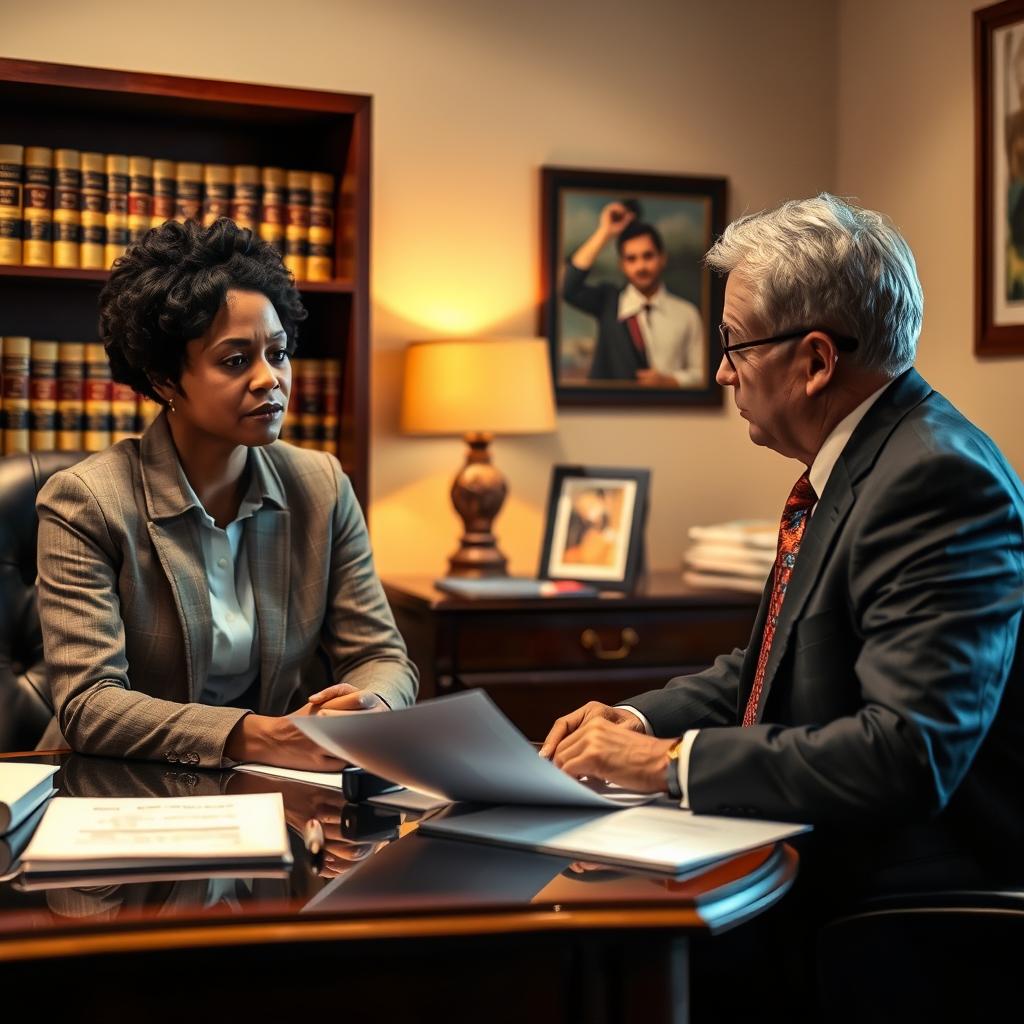
Graffiti Defense Lawyer Petworth, DC
If you are facing a graffiti-related charge in Petworth, Washington, D.C., the matter will be heard at the D.C. Superior Court’s Criminal Division and prosecuted by the United States Attorney’s Office for the District of Columbia. Graffiti offenses are treated as property damage under D.C. Law, and a conviction can carry lasting consequences, including a criminal record, fines, and even incarceration. Understanding the unique jurisdictional structure of the District — where federal prosecutors handle local crimes — and the court procedures that apply is the first step toward a well-prepared defense. Mr. Sris and the firm’s Of Counsel attorneys are experienced in representing clients charged with graffiti and property damage offenses throughout Petworth and the greater Washington, D.C. Area. From the moment an arrest is made, every procedural step matters: whether the case proceeds as a misdemeanor or a felony, the strength of the evidence collected, and how a release decision is reached through the Pretrial Services Agency rather than a cash bail system. Having counsel who knows the D.C. Superior Court, the local practices of the Metropolitan Police Department, and the approach taken by federal prosecutors can help protect your rights at each stage. To speak with an attorney about a graffiti defense matter in Petworth, call Law Offices Of SRIS, P.C. at (888) 437-7747. Law Offices Of SRIS, P.C. – Advocacy Without Borders.
What Graffiti Defense Means in Petworth, DC
Graffiti charges in Petworth are governed by D.C. Code Title 22, which addresses criminal offenses and penalties. In practice, a graffiti case may be charged as destruction of property. The severity of the charge often turns on the dollar value of the damage alleged. A lower-cost offense may be treated as a misdemeanor, while damage above a certain monetary threshold can be charged as a felony. Because the D.C. Superior Court is a unified trial court, all local criminal cases — including those arising in Petworth — are adjudicated at the same courthouse at 500 Indiana Avenue NW, at Judiciary Square. The United States Attorney’s Office for DC prosecutes these matters, giving federal prosecutors jurisdiction over local criminal charges. This hybrid federal-local structure is unique to the District and means the prosecution’s resources and approach can differ from what a defendant would face in a typical state court.
For Petworth residents, a graffiti charge often begins with an arrest by the Metropolitan Police Department. After arrest, the Pretrial Services Agency — a federal agency — conducts a risk assessment to recommend release conditions. The District does not rely on a cash bail system for most offenses; instead, it emphasizes community-based pretrial supervision. While this can mean that many defendants are released without posting money, the conditions imposed can be strict, and any violation may lead to new complications. The timeline of a graffiti case depends on factors such as whether the charge is a misdemeanor or a felony, the volume of evidence, and the court’s calendar. Misdemeanor matters may be resolved within a few months, while felony cases can take longer due to grand jury proceedings and additional hearings. An attorney who appears regularly at the D.C. Superior Court can offer insight into how a particular judge may handle a property damage case and what pretrial motions may be appropriate.
How Mr. Sris and the Firm’s Of Counsel Attorneys Handle Graffiti Defense Cases
When Law Offices Of SRIS, P.C. takes on a graffiti defense case in Petworth, the focus is on building a thorough defense from the outset. The first step is a careful review of the charging document and the evidence gathered by the Metropolitan Police Department. Graffiti cases often involve photographic evidence, witness statements, and sometimes surveillance footage. Mr. Sris and the firm’s Of Counsel attorneys scrutinize how the evidence was collected, whether any search or seizure issues exist, and whether the prosecution can meet its burden to prove the identity of the accused and the value of the alleged damage. Early intervention can make a difference: by engaging with the prosecutor before formal charges are filed or at the initial hearing, it may be possible to seek a reduction of the charge or a diversionary resolution.
In the D.C. Superior Court, the federal prosecutor assigned to the case will drive the charging decisions and any plea offer. Because the United States Attorney’s Office for DC handles a high volume of cases, presenting a well-organized defense early can influence the outcome. Where the evidence of damage is weak or the identification of the defendant is questionable, the firm may move to suppress evidence or seek dismissal. If the case proceeds to trial, the attorneys prepare for every stage, including jury selection and examination of witnesses, with the goal of achieving a favorable outcome. Throughout the process, clients are kept informed of their options, including the possibility of pursuing record sealing after the case concludes, as provided under D.C. Code § 16-803.
About Mr. Sris and the Firm’s Of Counsel Attorneys
Mr. Sris, Owner and Founder of Law Offices Of SRIS, P.C., has practiced since 1997 and concentrates his work on criminal defense matters across multiple jurisdictions. He is a former prosecutor, and his experience inside the courtroom — both as a prosecutor and as defense counsel — shapes the firm’s approach to every case. Mr. Sris is admitted to practice in Virginia, Maryland, the District of Columbia, New Jersey, and New York. He has testified before the Virginia House Courts of Justice Committee in support of 2019 HB 635 (chief patron Del. David Bulova).
Working alongside Mr. Sris, the firm’s Of Counsel attorneys bring extensive combined legal experience to criminal defense. Each Of Counsel attorney contracts directly with the firm and applies knowledge gained through years of courtroom practice. For clients in Petworth facing graffiti charges, the team works collaboratively to evaluate the evidence, develop a defense strategy, and represent the client’s interests at the D.C. Superior Court. The firm’s Arlington location serves District of Columbia clients conveniently, and consultations can be arranged by calling (888) 437-7747.
Frequently Asked Questions
Who prosecutes criminal cases in Washington, D.C.?
The United States Attorney’s Office for the District of Columbia (USAO-DC) prosecutes criminal cases in Washington, D.C., rather than a local district attorney. Because the District is a federal territory, local crimes charged under the D.C. Code are handled by federal prosecutors. All criminal cases are heard at the D.C. Superior Court at 500 Indiana Avenue NW. This structure means that the prosecuting authority brings substantial resources to each case, making knowledgeable defense counsel particularly important.
Does DC have cash bail?
No, the District of Columbia does not use a traditional cash bail system for most offenses. Instead, the federal Pretrial Services Agency conducts a risk assessment after arrest and recommends release conditions to the court. Many defendants are released without having to post money, but they may be subject to supervision requirements. The focus is on pretrial monitoring rather than financial detention.
Can I get my DC criminal record sealed?
Yes, many criminal records in the District of Columbia can be sealed under D.C. Code § 16-803. This statute allows for record sealing in cases that resulted in an acquittal, dismissal, or, after a waiting period, certain qualifying convictions. Marijuana-related offenses have expanded eligibility for sealing. A petition for record sealing is filed with the D.C. Superior Court, and the process requires careful attention to statutory requirements. An attorney can advise you on whether your graffiti charge is eligible for sealing.
How long does a criminal case take in D.C.?
The timeline for a criminal case in D.C. Varies based on the complexity of the charges and the court’s calendar. Misdemeanor cases, including many graffiti offenses, may be resolved within a few months. Felony cases generally take longer because of grand jury proceedings, additional motion hearings, and a potentially longer trial schedule. While the Speedy Trial Act imposes some constraints, the actual duration depends on the specific circumstances of the case.
Do I need a lawyer for a graffiti charge in Petworth?
While you are not legally required to hire an attorney, having legal representation for a graffiti charge can help protect your rights and pursue a favorable outcome. A conviction for property damage can result in a permanent criminal record, fines, and possible jail time. An attorney can assess the prosecution’s evidence, identify potential defenses, and seek a reduction or dismissal of the charge at the D.C. Superior Court. To discuss your matter, contact Law Offices Of SRIS, P.C. at (888) 437-7747.
What are the possible penalties for a graffiti conviction in D.C.?
Penalties for a graffiti or destruction-of-property conviction in D.C. Depend on the value of the damage and whether the charge is classified as a misdemeanor or a felony. Under D.C. Code Title 22, misdemeanor property damage can carry up to 180 days in jail and fines, while felony-level damage may result in longer prison sentences. The court has discretion in sentencing, and factors such as prior criminal history and the amount of restitution owed also play a role. Because the United States Attorney’s Office for DC prosecutes these cases, the federal prosecution posture can influence the severity of the charges pursued.
For additional information about criminal defense in the District, see our Washington, D.C. Criminal defense overview. Learn more about representation in nearby neighborhoods: Georgetown criminal defense, Capitol Hill criminal defense, Columbia Heights criminal defense, and Shaw criminal defense.
Primary sources: D.C. Code Title 22 – Criminal Offenses and Penalties, D.C. Superior Court, and United States Attorney’s Office for the District of Columbia.
Attorney advertising. Prior results do not guarantee a similar outcome. Results may vary.
Case results depend on a variety of factors unique to each case.