
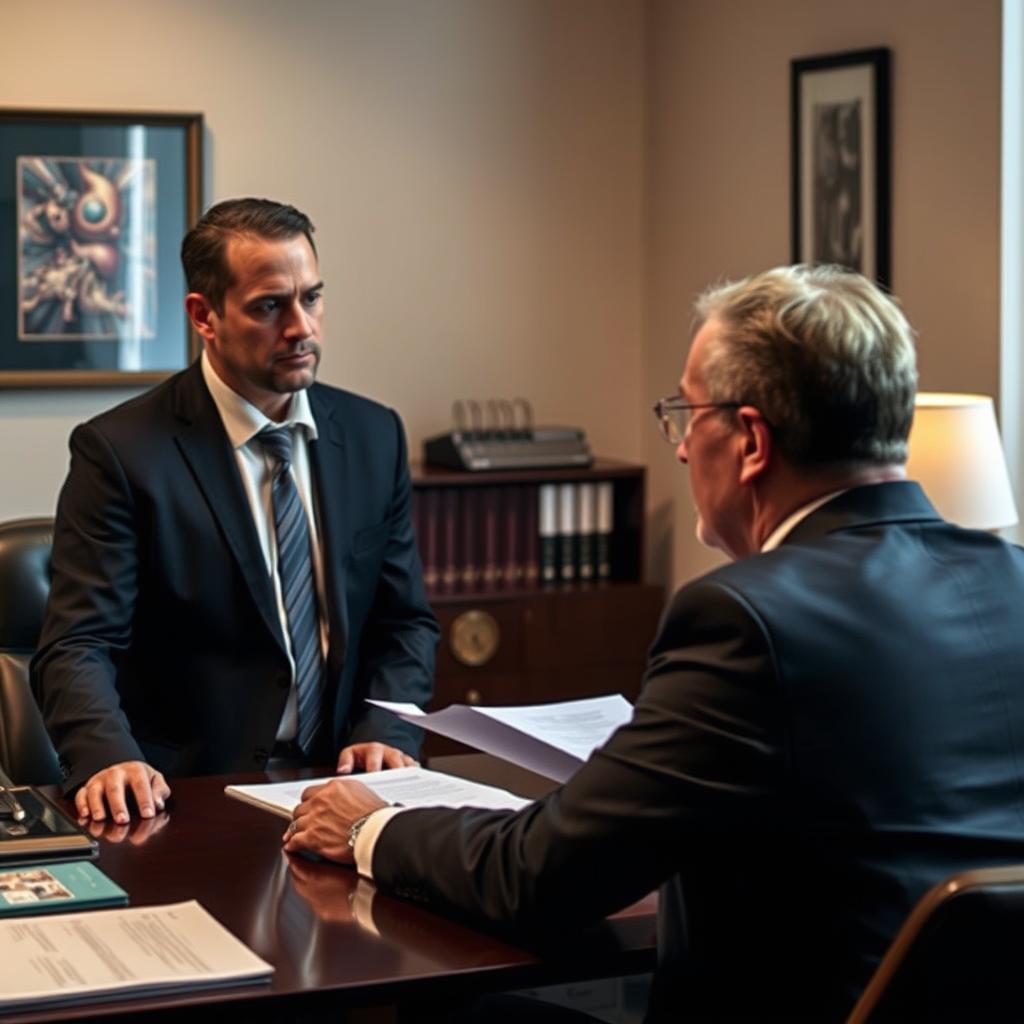
Graffiti Defense Lawyer Woodley Park, DC
Graffiti-related charges in the District of Columbia are prosecuted by the United States Attorney’s Office for the District of Columbia — not by a local district attorney. This federal-local hybrid system makes D.C. Criminal practice unique, and it demands defense counsel who are familiar with the D.C. Superior Court and the federal prosecutors who appear there. Law Offices Of SRIS, P.C. represents individuals facing graffiti allegations in Woodley Park and throughout the District. Our firm’s Arlington location — just across the Potomac — serves clients whose cases are heard at the Superior Court at 500 Indiana Avenue NW, near Judiciary Square. Whether the charge involves defacing public property, private commercial buildings, or residential structures along Connecticut Avenue or near the National Zoo, a graffiti arrest can carry serious consequences that affect your record, your employment, and your freedom. Mr. Sris and the firm’s Of Counsel attorneys work to protect your rights from the initial appearance through resolution. To request a consultation, call (888) 437-7747. Law Offices Of SRIS, P.C. – Advocacy Without Borders.
What Graffiti Defense Means in Woodley Park, DC
In the District of Columbia, graffiti is generally charged as a property crime. The relevant statutes are found in D.C. Code Title 22, which covers criminal offenses and penalties. Depending on the value of the damaged property and the circumstances of the alleged act, graffiti may be prosecuted as a misdemeanor or as a felony. A conviction can result in fines, restitution obligations, probation, and incarceration — and it creates a permanent criminal record that can affect housing, employment, and professional licensing.
Woodley Park sits along Connecticut Avenue, with a mix of residential neighborhoods, embassies, commercial storefronts, and the heavily visited National Zoo. Any incident involving graffiti in this area can draw the attention of both the Metropolitan Police Department and federal prosecutors. The investigation and charging process moves quickly once property damage is reported. Our firm understands how USAO-DC prosecutors evaluate graffiti cases, and we appear regularly in the D.C. Superior Court — the unified trial court that hears all local criminal matters, including graffiti-related offenses. Because D.C. Does not use a traditional cash-bail system, the Pretrial Services Agency conducts a risk assessment to determine release conditions. Having counsel early can make a meaningful difference in that process.
How Mr. Sris and the Firm’s Of Counsel Attorneys Handle Graffiti Defense Cases
When we accept a graffiti case in Woodley Park or elsewhere in the District, we begin by examining the evidence the government intends to rely on — photographs, witness statements, police reports, and any surveillance footage. Every element of the alleged offense must be proved beyond a reasonable doubt. We evaluate whether the damage actually constitutes “graffiti” as defined under the applicable statute, whether the accused had the necessary intent, and whether mistaken identity or an insufficient evidentiary foundation exists.
Our attorneys also examine the procedural history. If a search or seizure was conducted in violation of constitutional protections, we file the appropriate motions to suppress evidence or to dismiss charges. Because D.C. Criminal cases are prosecuted by Assistant United States Attorneys, negotiations take place with federal prosecutors; our familiarity with their office and its charging practices helps us pursue charge reductions, deferred prosecution agreements, or dismissals where the facts and the law support them. If trial is the trusted course, Mr. Sris and the firm’s Of Counsel attorneys are prepared to present a vigorous defense before a D.C. Superior Court judge or jury.
About Mr. Sris and the Firm’s Of Counsel Attorneys
Mr. Sris, Owner and Founder of Law Offices Of SRIS, P.C., is a former prosecutor with experience in criminal trial work. He is admitted in Virginia, Maryland, the District of Columbia, New Jersey, and New York, and has practiced in D.C. Courts for many years. His background as a prosecutor gives him insight into how the government builds and pursues a criminal case, which he uses to the advantage of his clients.
Mr. Sris works alongside the firm’s Of Counsel attorneys, experienced criminal defense practitioners who appear in D.C. Superior Court and collaborate on case strategy. Together, Mr. Sris and the firm’s Of Counsel attorneys bring extensive combined legal experience. Results may vary. Every graffiti case is handled with careful attention to the individual circumstances and with a commitment to pursuing the most favorable resolution possible.
Frequently Asked Questions
Who prosecutes graffiti-related charges in Washington, D.C.?
Criminal cases in the District of Columbia, including graffiti offenses, are prosecuted by the United States Attorney’s Office for the District of Columbia (USAO-DC), not by a local district attorney. Because D.C. Is a federal territory, Assistant United States Attorneys handle local crimes under the D.C. Code. This federal-local hybrid system means that the prosecution operates with federal resources and charging practices that differ from those in state jurisdictions. Graffiti cases are heard at the D.C. Superior Court, which is physically located at 500 Indiana Avenue NW, Washington, D.C. 20001. Having a defense attorney who understands how USAO-DC prosecutors evaluate property-crime cases can be critical from the first court appearance through disposition.
What are the potential consequences of a graffiti conviction in DC?
A graffiti conviction in D.C. Can lead to fines, a period of incarceration, probation, community service, and a court order to pay restitution for property damage, depending on the classification of the offense and the defendant’s prior record. Even a misdemeanor vandalism conviction creates a permanent criminal record that can affect employment background checks, security clearances, and professional licensing. In some instances, prosecutors may charge graffiti as a felony if the damage is extensive or if the timing and nature of the conduct trigger an enhancement. The exact penalties are determined by the specific D.C. Code section under which the person is charged, and every case is fact-specific. Consulting with an attorney early can help you understand the exposure.
Can I get a graffiti charge sealed from my DC record?
D.C. Law allows for record sealing under D.C. Code § 16-803 for certain offenses, including graffiti-related charges, after the case is resolved through an acquittal, dismissal, or, in some situations, after completion of a waiting period following a conviction. The eligibility rules are complex, and some convictions may not be sealable at all. An attorney can evaluate whether your graffiti charge qualifies for sealing and can prepare and file the petition with the D.C. Superior Court. Because sealing can improve access to housing and employment, it is often an important step after the underlying case concludes. The timing and eligibility depend on the exact code section charged and the outcome.
Do I need a lawyer for a graffiti charge in Woodley Park?
While you are not legally required to hire a lawyer, the consequences of a graffiti conviction in D.C. Are serious enough that legal representation is strongly recommended. The United States Attorney’s Office employs experienced prosecutors who understand how to prove property-crime cases. Without an attorney, you may not know how to evaluate the evidence, file meaningful pretrial motions, negotiate for a lesser charge, or recognize a defense that could lead to a dismissal. An attorney can also advise you on collateral consequences such as immigration effects, if applicable, and can work toward an outcome that minimizes the long-term impact on your life. Request a consultation with Mr. Sris and the firm’s Of Counsel attorneys at (888) 437-7747.
How does the release process work if I am charged with graffiti in DC?
D.C. Uses the Pretrial Services Agency, a federal agency, rather than a traditional cash-bail system, to determine whether a defendant will be released and under what conditions. After an arrest, PSA conducts a risk assessment and makes a recommendation to the court. Many defendants charged with non-violent property offenses are released without having to post money. The court may impose conditions such as stay-away orders, regular check-ins, or drug testing. Having counsel involved at this early stage can help present information that supports release on the least restrictive terms. Our firm appears at presentment and bond-review hearings to advocate for each client’s release and to address any concerns the court or PSA raises.
Additional D.C. Criminal Defense Resources
Washington, D.C. Criminal defense practice |
Georgetown criminal defense lawyer |
Cleveland Park criminal defense attorney |
Spring Valley criminal defense representation
Official Legal Sources
D.C. Code Title 22 (Criminal Offenses)
D.C. Superior Court
Attorney advertising. Prior results do not guarantee a similar outcome.
Results may vary.
Case results depend on a variety of factors unique to each case.