
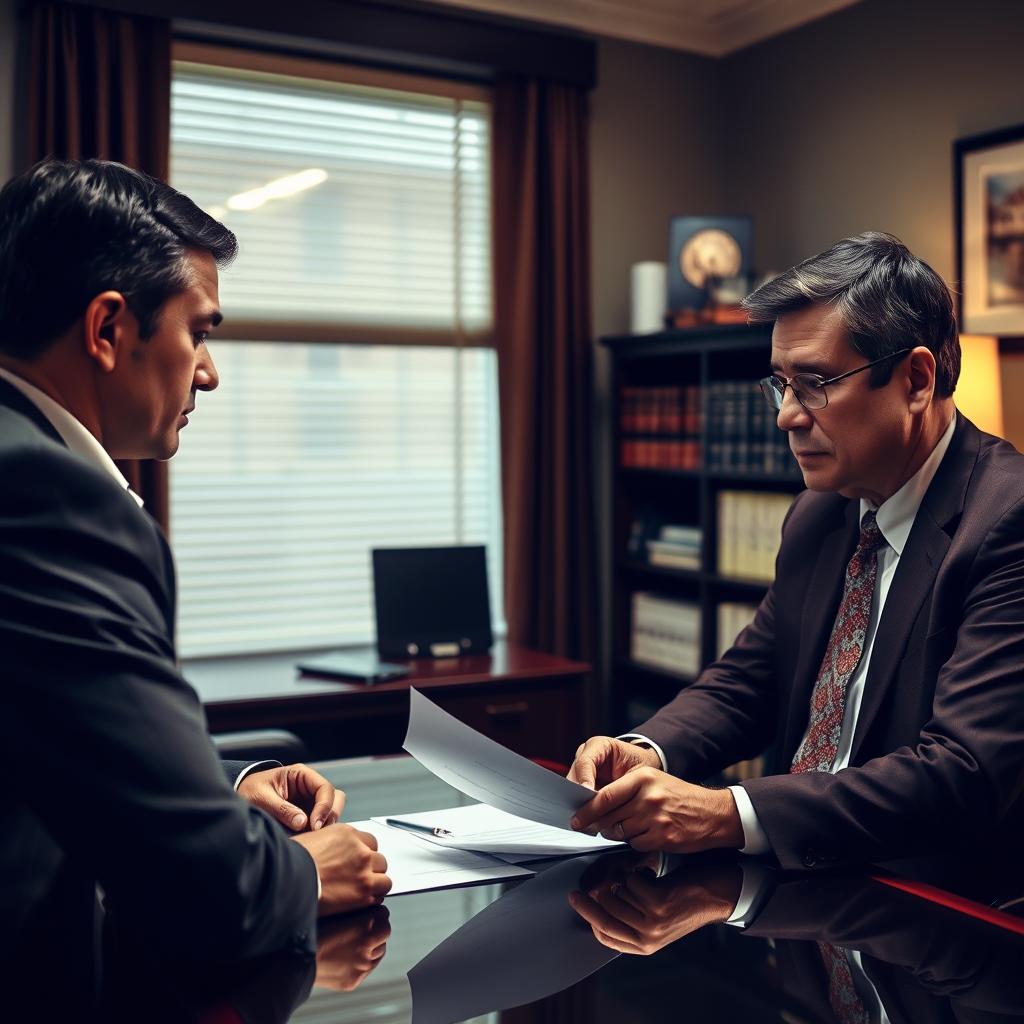
Grand Larceny Lawyer Washington DC
An accusation of grand larceny in Washington, D.C. Can upend your career, your security clearance, and your standing in the community. In the District of Columbia, theft in the first degree—commonly called grand larceny—is prosecuted not by a local district attorney but by the United States Attorney’s Office for the District of Columbia. The case proceeds in D.C. Superior Court at 500 Indiana Avenue NW, where federal prosecutors apply D.C. Code provisions with the resources of a U.S. Attorney’s Office behind them. A conviction carries the possibility of incarceration, a lasting criminal record, and collateral consequences that extend well beyond the courtroom. Mr. Sris, a former prosecutor and the Owner and Founder of Law Offices Of SRIS, P.C., understands how the government builds grand larceny cases because he has stood on both sides of the courtroom. The firm’s Of Counsel attorneys bring experience in D.C. Criminal defense, including matters heard in the Criminal Division of D.C. Superior Court. If you or someone close to you is facing a grand larceny charge in the District, reach Law Offices Of SRIS, P.C. at (888) 437-7747 to request a consultation. Law Offices Of SRIS, P.C. – Advocacy Without Borders.
What Grand Larceny Means in Washington, D.C.
Washington, D.C. Occupies a unique position in the American legal system. It is a federal territory, yet local criminal offenses are prosecuted under the D.C. Code in D.C. Superior Court—a court established by Congress. The term “grand larceny” is widely used by the public and the legal community alike, though the D.C. Code itself categorizes the offense as theft in the first degree under D.C. Code § 22-3212. The distinction that elevates a theft to the felony level is the value of the property involved. When the value of the property taken is $1,000 or more, the charge is a felony carrying significant potential penalties. Theft of property valued below that threshold is typically prosecuted as theft in the second degree, a misdemeanor.
Cases are heard at the D.C. Superior Court, located at 500 Indiana Avenue NW, adjacent to Judiciary Square. The United States Attorney’s Office for the District of Columbia prosecutes these cases using the same institutional resources available to any federal prosecutor’s office—investigative support, forensic analysis, and experienced trial attorneys. Unlike most jurisdictions, D.C. Does not use a traditional cash bail system. Instead, the Pretrial Services Agency, a federal agency, conducts a risk assessment and makes release-condition recommendations to the court. The firm’s Arlington location, approximately 4.5 miles from the courthouse, serves clients throughout the District, from Georgetown and Capitol Hill to Anacostia and Deanwood. Understanding how the USAO-DC approaches theft cases and how D.C. Superior Court procedures differ from those in neighboring Virginia and Maryland is central to mounting an effective defense.
How Mr. Sris and the Firm’s Of Counsel Attorneys Handle Grand Larceny Cases
Every grand larceny case begins with a thorough examination of the government’s evidence. The firm’s Of Counsel attorneys review the charging documents, police reports, witness statements, and any surveillance footage or forensic accounting records the prosecution intends to use. In D.C., the Metropolitan Police Department conducts the initial investigation, and the USAO-DC decides whether to bring charges. Mr. Sris, drawing on his experience as a former prosecutor, evaluates the case from the government’s perspective—identifying where the evidence is strong and, more importantly, where it is weak. Value of the property taken is often the central factual dispute. The prosecution must prove the property was worth $1,000 or more to sustain a felony conviction; if the evidence on value is insufficient, the charge may be reduced to a misdemeanor or dismissed.
The firm’s approach includes exploring every available procedural and substantive defense. Was the property taken with the intent to permanently deprive the owner, or was there a claim of right or a misunderstanding? Were the defendant’s statements obtained in compliance with constitutional requirements? Did the police have probable cause for any search or seizure? In D.C. Superior Court, pretrial motion practice can be decisive—motions to suppress evidence, motions to dismiss for lack of probable cause, and motions to compel discovery are tools the firm’s Of Counsel attorneys use to test the prosecution’s case before it reaches a jury. The firm works toward favorable outcomes for clients at every stage, from the initial presentment through trial if necessary. Results may vary.
About Mr. Sris and the Firm’s Of Counsel Attorneys
Mr. Sris, Owner and Founder of Law Offices Of SRIS, P.C., established the firm in 1997. He is a former prosecutor who has practiced across five jurisdictions—Virginia, Maryland, the District of Columbia, New Jersey, and New York—for nearly three decades. Mr. Sris testified before the Virginia House Courts of Justice Committee in support of 2019 HB 635 (chief patron Del. David Bulova). His experience on the prosecution side informs his approach to criminal defense: he understands how charging decisions are made, how evidence is marshaled, and how the government evaluates the strengths and weaknesses of its own case.
The firm’s Of Counsel attorneys who handle criminal matters in D.C. Bring decades of trial experience to the courtroom. They are admitted to practice in the District of Columbia and appear regularly in D.C. Superior Court. Their background includes experience with complex felony cases, challenges to scientific and technical evidence, and a thorough understanding of the procedural landscape unique to the District—including the Pretrial Services Agency’s role in release decisions and the USAO-DC’s prosecutorial approach. The firm serves clients from every corner of the District, including Georgetown, Dupont Circle, Capitol Hill, Shaw, Anacostia, and all surrounding neighborhoods.
Frequently Asked Questions
What is the difference between grand larceny and petit larceny in Washington, D.C.?
The primary difference is the value of the property involved—theft of property valued at $1,000 or more is charged as a felony (first-degree theft, commonly called grand larceny), while theft of property valued below $1,000 is a misdemeanor (second-degree theft, or petit larceny). Under D.C. Code § 22-3212, the felony classification carries substantially greater potential penalties, including incarceration and a permanent felony record. The value threshold is a critical element the prosecution must prove. Disputes over valuation—whether an item was worth $1,000 or less—can determine whether a case remains a felony or is reduced to a misdemeanor.
Who prosecutes grand larceny cases in D.C.?
Grand larceny and all other local criminal offenses in Washington, D.C., are prosecuted by the United States Attorney’s Office for the District of Columbia (USAO-DC), not a local district attorney or state prosecutor. This is because D.C. Is a federal territory, and the USAO-DC prosecutes violations of the D.C. Code in D.C. Superior Court. The prosecutors are Assistant United States Attorneys with the full resources of a federal prosecutor’s office. All cases are heard at D.C. Superior Court, 500 Indiana Avenue NW, Washington, DC 20001.
Does D.C. Use cash bail for grand larceny cases?
No, the District of Columbia does not use a traditional cash bail system for most offenses. Instead, the Pretrial Services Agency—a federal agency—conducts a risk assessment after arrest and makes a recommendation to the court regarding release conditions. The judge then decides whether the defendant should be released pending trial and under what conditions, such as supervision, travel restrictions, or drug testing. Release decisions are based on flight risk and community safety considerations rather than the ability to pay.
Can a grand larceny conviction be sealed from my record in D.C.?
Yes, record sealing is available for certain convictions under D.C. Code § 16-803, though eligibility depends on the specific offense, the time that has passed since the completion of the sentence, and whether any subsequent offenses have occurred. Acquittals and dismissals are generally eligible for sealing more quickly. An experienced criminal defense attorney can evaluate whether your particular situation meets the statutory criteria and guide you through the petition process in D.C. Superior Court.
What should I do if I am accused of grand larceny in Washington, D.C.?
If you are accused of grand larceny in D.C., you should exercise your right to remain silent, decline to speak with law enforcement without an attorney present, and contact a criminal defense lawyer as soon as possible. Anything you say to the police or to anyone else can be used against you. Do not discuss the facts of the case with friends, family, or on social media. Preserve any documents, receipts, or communications that may be relevant. Prompt legal guidance can help protect your rights during the investigation and charging phases. To request a consultation, reach Law Offices Of SRIS, P.C. at (888) 437-7747.
How long does a grand larceny case take in D.C. Superior Court?
The timeline for a grand larceny case in D.C. Superior Court varies depending on the complexity of the case, the court’s calendar, and whether the matter proceeds to trial or is resolved through a plea agreement. Misdemeanor cases generally move more quickly than felonies. Felony cases involve additional procedural steps, including a preliminary hearing or grand jury indictment, and may take several months or longer to resolve. The Speedy Trial Act and D.C. Procedural rules impose certain time constraints, but the actual duration depends on the specific circumstances of each case.
Related pages: Georgetown Criminal Lawyer • Capitol Hill Criminal Defense • Shaw Criminal Attorney • Anacostia Criminal Defense Lawyer
Official resources: D.C. Superior Court • D.C. Code Title 22 — Criminal Offenses • U.S. Attorney’s Office for the District of Columbia
Attorney advertising. Prior results do not guarantee a similar outcome. Case results depend on a variety of factors unique to each case. Results may vary. Law Offices Of SRIS,