
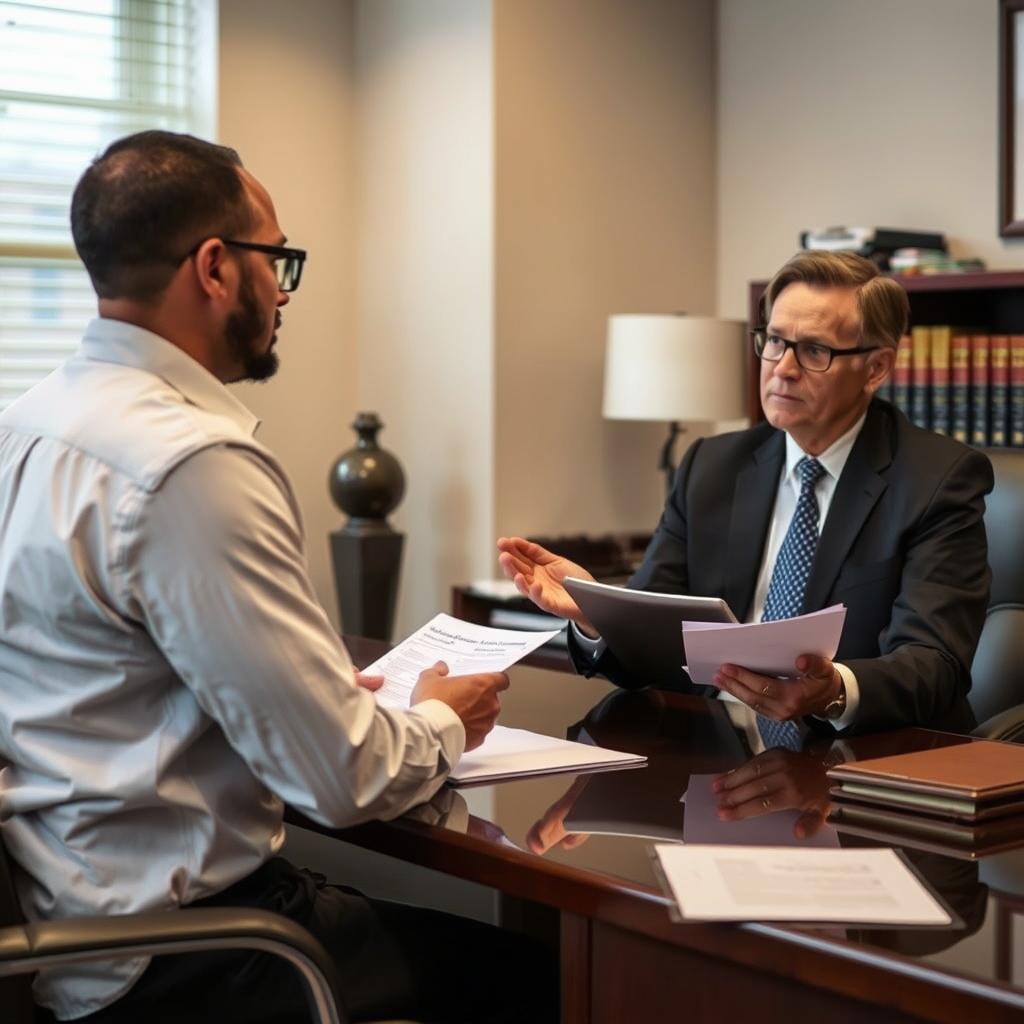
Resisting Arrest Lawyer Spring Valley, DC
Law Offices Of SRIS, P.C. | Founded 1997 | (888) 437-7747 Law Offices Of SRIS, P.C. – Advocacy Without Borders.
Mr. Sris admitted in Virginia, Maryland, the District of Columbia, New Jersey, and New York. Practicing since 1997.
Consultation by appointment. The Arlington location serves clients throughout the District of Columbia, including Spring Valley.
When a charge of resisting arrest is brought in Spring Valley, the matter proceeds through a unique prosecutorial system—one where local crimes are pursued by the United States Attorney’s Office for the District of Columbia, a federal prosecutor. A conviction can carry consequences that affect your liberty, employment, and reputation, so having an experienced defense attorney who understands both the D.C. Code and District of Columbia Superior Court procedure is an important safeguard. Mr. Sris, Owner and Founder of Law Offices Of SRIS, P.C., and the firm’s Of Counsel attorneys represent individuals facing resisting-arrest allegations in Spring Valley and throughout the District. The firm practices in criminal defense across Virginia, Maryland, the District of Columbia, New Jersey, and New York. Call (888) 437-7747 to request a consultation.
Counsel appearing on criminal matters at the District of Columbia.
What Resisting Arrest Means in Spring Valley, DC
In the District of Columbia, the offense commonly called “resisting arrest” is typically charged under D.C. Code § 22-405, which criminalizes interfering with a law enforcement officer in the performance of their duties. The charge can arise from a range of conduct, from physically struggling with an officer to simply failing to comply with a verbal command that an officer interprets as obstruction. Because the statute is broadly worded, the circumstances surrounding the encounter—what was said, whether force was used, and the officer’s conduct—often become central issues in the defense.
Spring Valley, a neighborhood in Northwest Washington, D.C., is within the jurisdiction of the D.C. Superior Court (Criminal Division), located at 500 Indiana Avenue NW. Cases from this area are prosecuted not by a local district attorney but by the United States Attorney’s Office for the District of Columbia (USAO-DC). The unique federal/local hybrid structure means that prosecutors are part of the U.S. Department of Justice, and the court’s procedural rules reflect both local practice and federal influence. A resisting-arrest charge in this setting is a misdemeanor that can result in incarceration, fines, and a criminal record if a conviction results. Pretrial release decisions are managed by the Pretrial Services Agency, a federal agency that conducts risk assessments rather than relying on traditional cash bail.
How Mr. Sris and the Firm’s Of Counsel Attorneys Handle Resisting Arrest Cases
A defense strategy against a resisting-arrest charge begins with a careful review of the police report, body-worn camera footage, and any witness statements. The central question is often whether the accused’s actions actually met the legal definition of resisting, or whether the officer’s response was disproportionate. Mr. Sris and the firm’s Of Counsel attorneys work to identify procedural deficiencies, factual inconsistencies, and constitutional issues—such as an unlawful arrest or excessive force—that can form the basis for a motion to suppress evidence or a motion to dismiss.
The firm approaches each matter with the understanding that every case is shaped by its specific facts and by the culture of the D.C. Superior Court. Because the USAO-DC prosecutes the case, the defense may involve discussions with experienced federal prosecutors who handle the local docket. The timeline for a resisting-arrest case varies by case complexity and the court’s calendar. In some instances, early resolution through plea negotiations or a deferred-disposition program may be suitable; in others, the matter may proceed through motions and trial. Mr. Sris and the firm’s Of Counsel attorneys bring extensive combined legal experience. Results may vary.
About Mr. Sris and the Firm’s Of Counsel Attorneys
Mr. Sris is a former prosecutor who founded Law Offices Of SRIS, P.C. in 1997. He is admitted to practice in Virginia, Maryland, the District of Columbia, New Jersey, and New York, and has handled criminal matters across multiple jurisdictions. His background includes testimony before the Virginia House Courts of Justice Committee in support of 2019 HB 635 (chief patron Del. David Bulova). Mr. Sris works alongside the firm’s Of Counsel attorneys, who are independent practitioners contracting directly with the firm and who bring extensive trial and litigation experience to criminal defense in the District of Columbia.
The firm’s Of Counsel attorneys include lawyers with deep familiarity with D.C. Superior Court procedure and the particular dynamics of cases prosecuted by the USAO-DC. Because the Office Of the United States Attorney for the District of Columbia pursues local crimes, a defense counsel who understands both federal prosecutorial approaches and local criminal practice is an asset. To discuss your resisting-arrest matter with Mr. Sris and the firm’s Of Counsel attorneys, call (888) 437-7747 and request a consultation.
Frequently Asked Questions
Who prosecutes resisting arrest cases in Washington, D.C.?
Resisting arrest and other local crimes in the District of Columbia are prosecuted by the United States Attorney’s Office for the District of Columbia (USAO-DC), not a local district attorney. The USAO-DC is part of the U.S. Department of Justice and handles all local criminal matters in D.C. Superior Court. This means that a person charged with resisting arrest faces a federal prosecutor in a local court. Cases are heard at the D.C. Superior Court at 500 Indiana Avenue NW. The Pretrial Services Agency, a federal agency, handles release assessments in place of a cash bail system. For an individual charged with resisting arrest, having a defense attorney who is familiar with both the D.C. Code and the practices of the USAO-DC can be important.
Does the District of Columbia use cash bail for resisting arrest charges?
No, the District of Columbia does not use a traditional cash bail system. Instead, the Pretrial Services Agency (PSA) conducts a risk assessment and recommends release conditions to the court. Most defendants are released without posting money, though the court may impose conditions such as supervision, stay-away orders, or drug testing. The PSA report is an important factor in determining whether a person is held or released pending trial. The firm helps clients understand the pretrial process and advocates for the least restrictive release conditions appropriate under the circumstances.
Can a resisting arrest charge be sealed from my D.C. Criminal record?
Yes, in many circumstances a resisting arrest charge can be sealed under D.C. Law if the case ends in acquittal, dismissal, or a not-guilty verdict. The District of Columbia allows record sealing under D.C. Code § 16-803 for qualifying outcomes. Even some convictions, after a waiting period, may be eligible for sealing, particularly if the conviction is for a minor offense. The petition is filed in D.C. Superior Court, and the process requires a showing that the person is no longer a threat to public safety. An attorney can assess whether your particular resisting-arrest case meets the statutory requirements for record sealing.
How long does a criminal case like resisting arrest take in D.C.?
The length of a resisting arrest case in D.C. Superior Court varies depending on the complexity of the matter, the court’s schedule, and whether the case is resolved by plea or goes to trial. A misdemeanor case may be resolved in a matter of months if it proceeds through an early plea, while a contested case that involves motions and a trial can take longer. Delays can also arise if competency evaluations or other pre-trial issues arise. An experienced attorney can give you a better sense of the expected timeline after reviewing the specifics of your case.
Do I need a lawyer for a resisting arrest charge in Spring Valley?
While you are not legally required to have a lawyer, a resisting arrest charge in the District of Columbia is a criminal matter that can result in a permanent record, jail time, and other consequences. An attorney can evaluate whether the police had a lawful basis for the arrest, whether the evidence supports the charge, and what defenses may apply. Because the United States Attorney’s Office prosecutes the case, the prosecution brings federal resources to what is technically a local offense. The firm’s attorneys appear regularly in D.C. Superior Court and are familiar with the prosecution and court practices that affect resisting arrest cases.
Additional resources: D.C. Superior Court website (dccourts.gov) | D.C. Code Title 22 (code.dccouncil.gov)
Related practice pages: criminal defense lawyer in Washington, D.C. | criminal lawyer in Georgetown | criminal defense attorney in Cleveland Park
Attorney advertising. Prior results do not guarantee a similar outcome. Results may vary. Case results depend on a variety of factors unique to each case.